

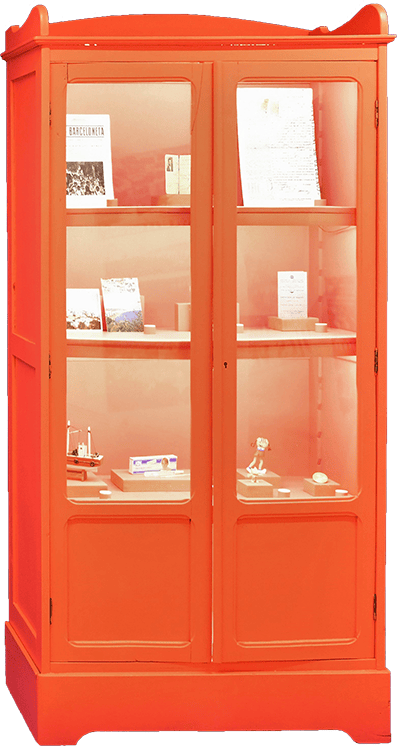
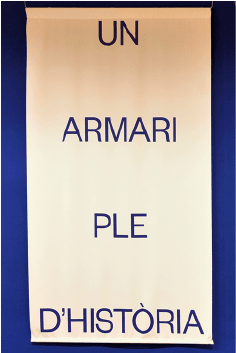
A wardrobe full of history
When a house or apartment is emptied, a multitude of objects, photographs and personal memories appear, which, when put in order and contextualised, can reconstruct the life of a person, a family or even the history of a territory.
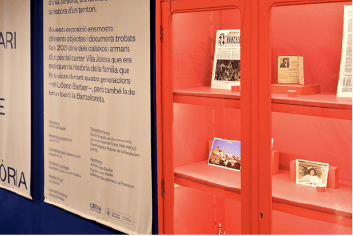
This exhibition shows different objects and documents found in 2021 in the drawers and wardrobes of an apartment on carrer Vila Joiosa which explain the story of the family who lived there for four generations —the López-Barber family—, but also that of a whole neighbourhood: the La Barceloneta neighbourhood of Barcelona.
A wardrobe full of history
When a house or apartment is emptied, a multitude of objects, photographs and personal memories appear, which, when put in order and contextualised, can reconstruct the life of a person, a family or even the history of a territory.
This exhibition shows different objects and documents found in 2021 in the drawers and wardrobes of an apartment on carrer Vila Joiosa which explain the story of the family who lived there for four generations —the López-Barber family—, but also that of a whole neighbourhood: the La Barceloneta neighbourhood of Barcelona.
A wardrobe full of history
When a house or apartment is emptied, a multitude of objects, photographs and personal memories appear, which, when put in order and contextualised, can reconstruct the life of a person, a family or even the history of a territory.
This exhibition shows different objects and documents found in 2021 in the drawers and wardrobes of an apartment on carrer Vila Joiosa which explain the story of the family who lived there for four generations —the López-Barber family—, but also that of a whole neighbourhood: the La Barceloneta neighbourhood of Barcelona.

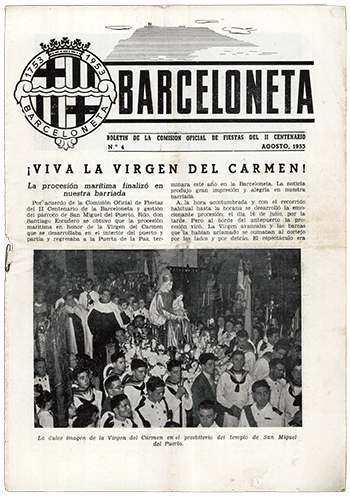
Bulletin from the celebration of the second centenary of the foundation of the La Barceloneta neighbourhood (1953)
The creation of the La Barceloneta neighbourhood
This bulletin takes us back to 1953, when, in the height of the Franco regime, diverse activities were organised to commemorate the 200-year anniversary of the creation of the neighbourhood. La Barceloneta was built in the mid-18th century on land reclaimed from the sea, where the island of Maians had been, full of fishermen’s huts and storerooms. The population in this area had grown a lot, especially since the War of the Spanish Succession, when residents of the La Ribera neighbourhood were displaced to build the military Citadel.
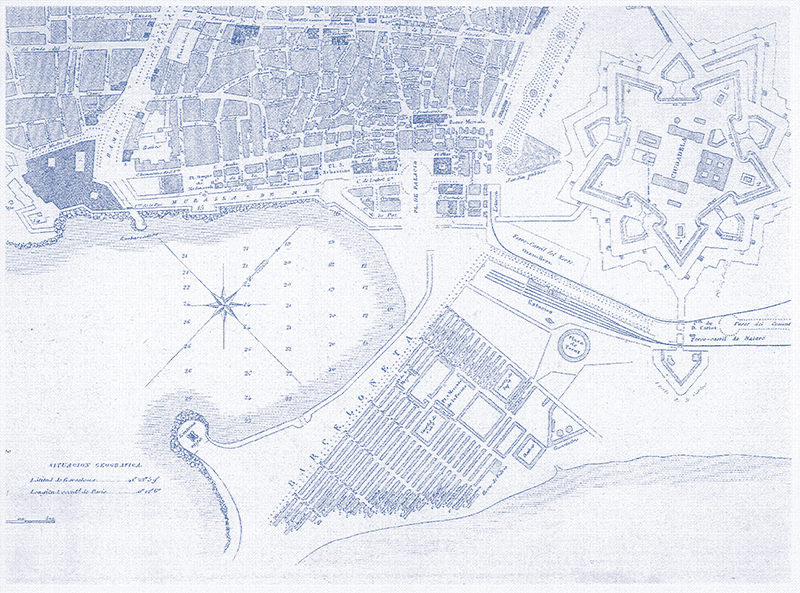
In 1749 captain-general Jaime Miguel de Guzmán commissioned the military engineer Juan MartÃn Cermeño to create a new neighbourhood, with blocks of uniform houses and with two large squares: the plaça de l’Església and the plaça de la Font, where the market is located today. In 1753 the first house was built on the corner of what is today passeig de Joan de Borbó and carrer de la Maquinista.
Map of Barceloneta from the nineteenth century (1849). AMDCV-FFPB

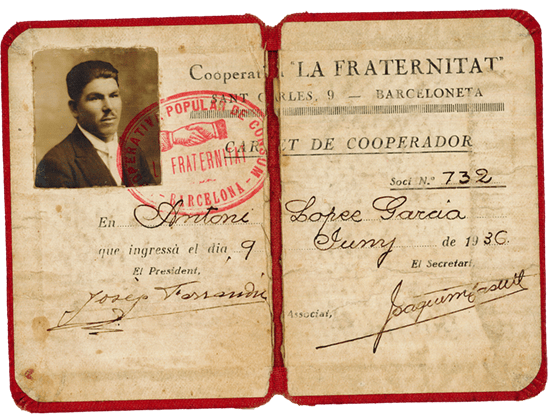
La Fraternitat membership card belonging to Antonio López (1936)
Cooperatives
At the end of the 19th century, the cooperative movement was taking root in the working neighbourhoods of Barcelona to tackle the economic difficulties faced by the working class. Through solidarity and mutual help, cooperatives organised the consumption, production and credit of many families, following the principles of economic democracy. The La Fraternitat cooperative (1879-1981) was created in La Barceloneta, and today its modernist building is home to the neighbourhood library. There used to be a shop on the ground floor; a function room where dances, concerts and meals were held on the first floor; a small theatre on the second floor; and the library and some offices on the third floor.Â
Later, other cooperatives were founded in the neighbourhood, such as El Segle XX (1901), La Victòria (1901), the Centre Cooperatiu de Pescadors (1901), La Joventut Pescadora (1911) and La Salvació Fraternal (1913).
The original building of La Fraternitat at number 9 Carrer de Sant Carles, in 1901.
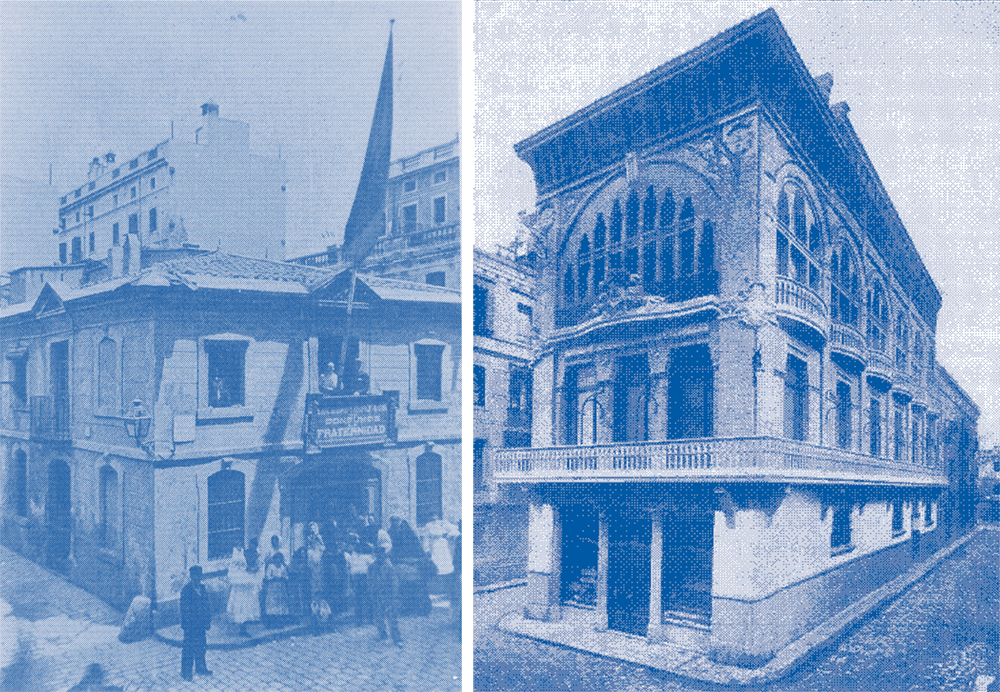
The new headquarters of the cooperative, in modernist style, opened in 1917 on the same site. AMDCV-FFPB
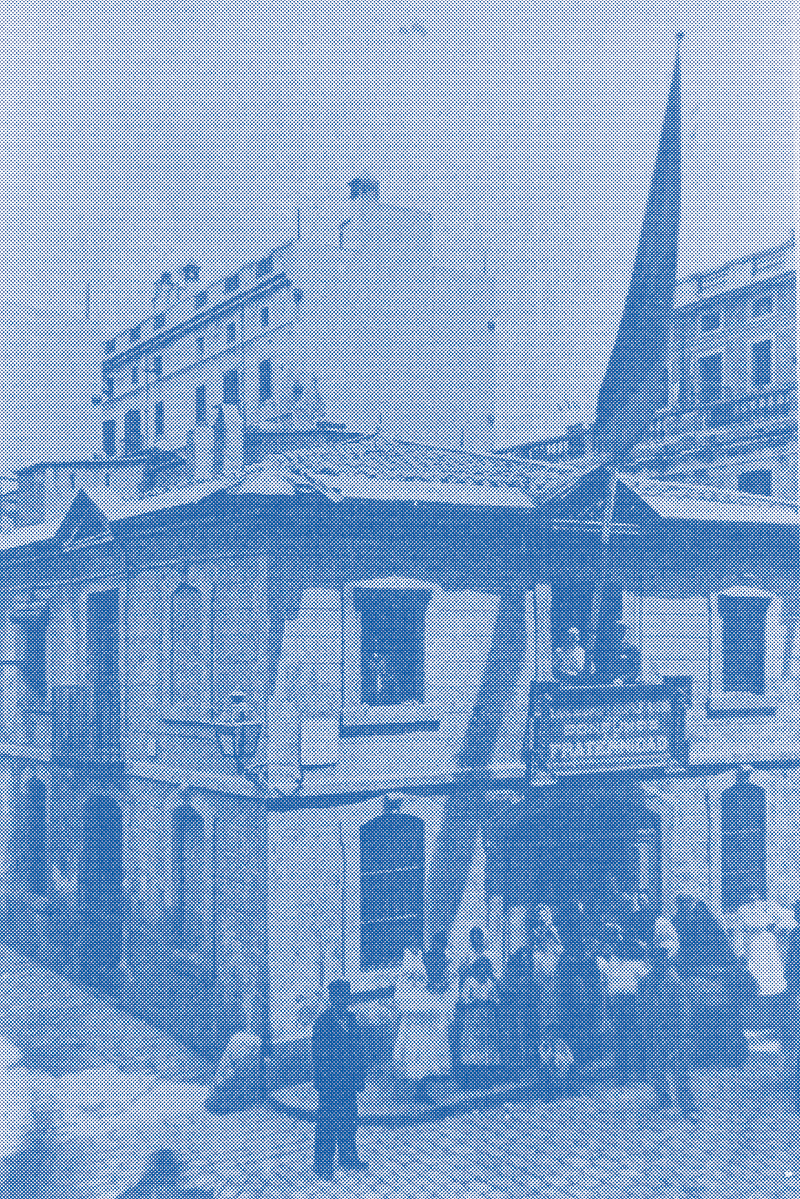
The original building of La Fraternitat at number 9 Carrer de Sant Carles, in 1901.
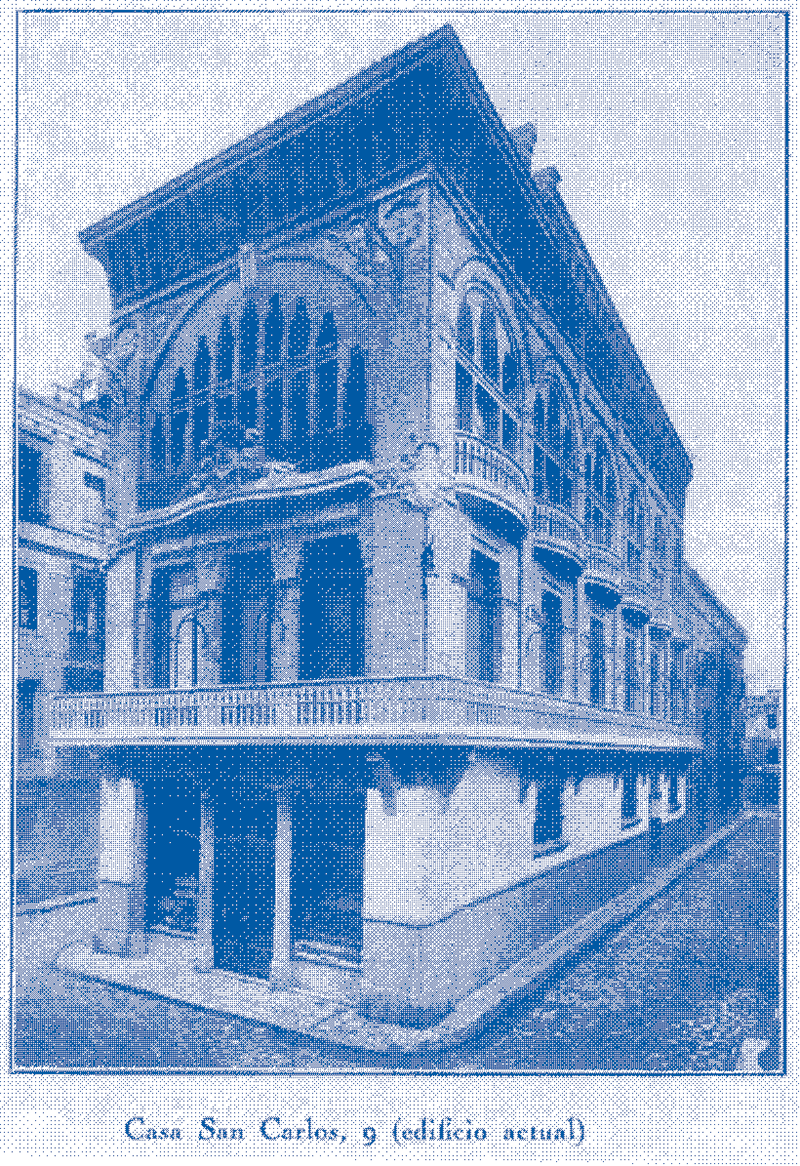
The new headquarters of the cooperative, in modernist style, opened in 1917 on the same site. AMDCV-FFPB
The original building of La Fraternitat at number 9 Carrer de Sant Carles, in 1901.
The new headquarters of the cooperative, in modernist style, opened in 1917 on the same site. AMDCV-FFPB

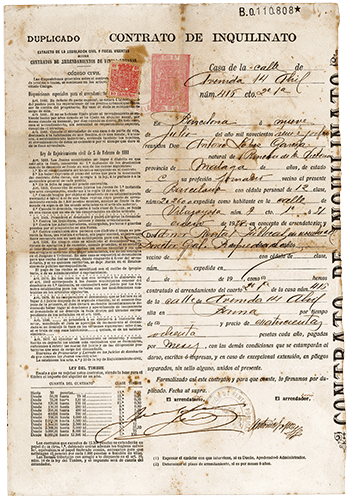
Rental contract for an apartment in the Casa de les Punxes (1938)
The Civil War airstrikes
This contract reveals that in 1937, fleeing the Civil War airstrikes, the López-Barber family went to live temporarily in one of the most emblematic modernist buildings in the Eixample neighbourhood: the Casa de les Punxes, by Josep Puig i Cadalfach.
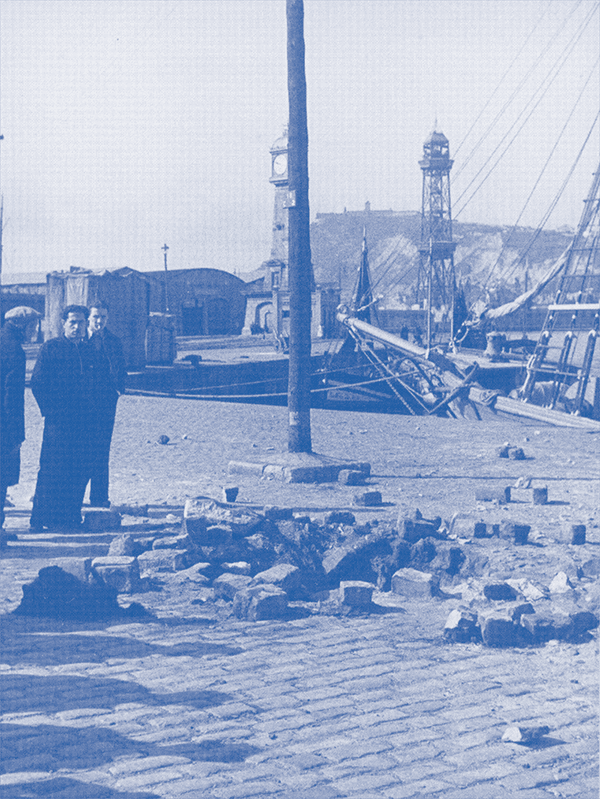
La Barceloneta was one of the neighbourhoods most affected by Fascist aviation during the war. It suffered several attacks as a result of its strategic position between the port and key factories such as the Catalana de Gas and La Maquinista Terrestre i MarÃtima. The airstrikes were so intense that the majority of families were evacuated to other parts of the city, especially to the higher area, where many apartments and houses had been left empty after their wealthy owners fled them when the war broke out.
Effects of a bombardment on the fishermen’s wharf (March 16, 1937). AFB

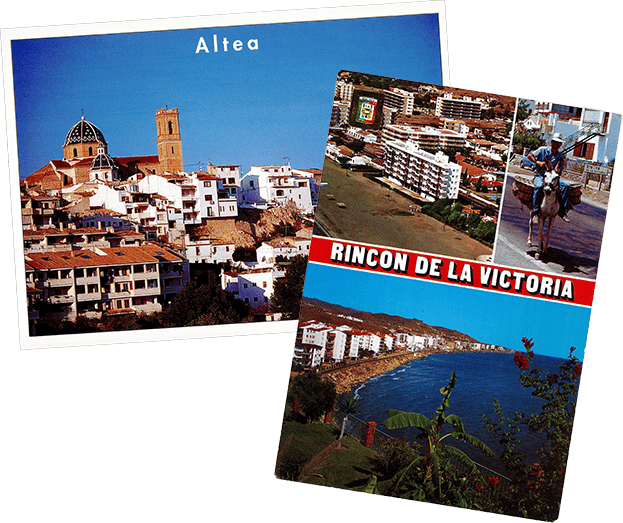
Postcards from Altea and Rincón de la Victoria
A host neighbourhood
Like the majority of the families in the neighbourhood, the López-Barber family was of foreign origin. The father was born in Rincón de la Victoria (Andalusia) and the maternal grandparents had come from Altea (Valencia). The expectation of finding work at the port or in the neighbourhood industries, such as La Maquinista Terrestre i MarÃtim and the Nueva Vulcano, meant that La Barceloneta received several waves of migration. During the 19th century, the majority of newcomers were sea people from other Catalan, Balearic and Valencian ports, while in the 20th century they mainly came from the rest of Spain.
Between 1975 and 1985 the first immigrants from outside Spain began to arrive, and today 40.5% of the population of La Barceloneta is of foreign origin. The most numerous community is Italian (19.3%), followed by the Pakistani (7.1%) and Moroccan (5.5%) communities. The Latin American population, from different countries, makes up 13% of the migrant population.
Group of workers from various origins in front of the Bar Papi on Carrer Alegria (1940). AMDCV-FFPB
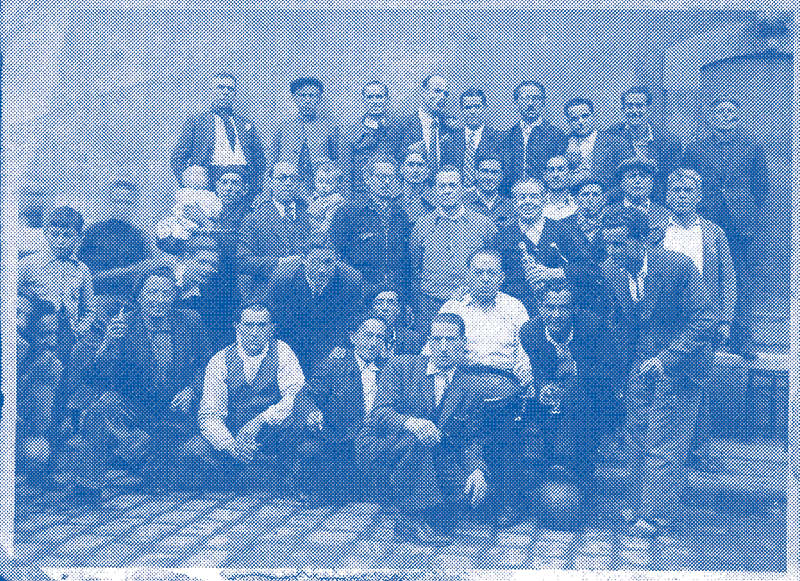

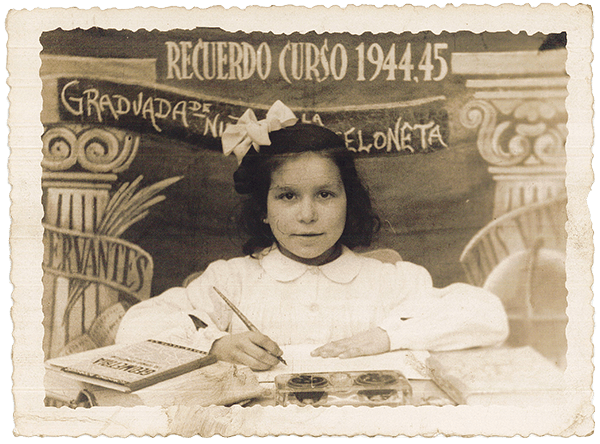
Photo of Rosa López in the Escola Graduada, academic year 1944-45
The neighbourhood schools
During the 20th century there were several schools with varying educational styles in La Barceloneta. In 1921 the Escola del Mar was inaugurated, a secular and progressive educational centre, in a wooden building on the beach. The building was destroyed by the airstrikes during the Civil War, but the school continued its activity in Montjuïc and eventually in Guinardó, where it still continues today.
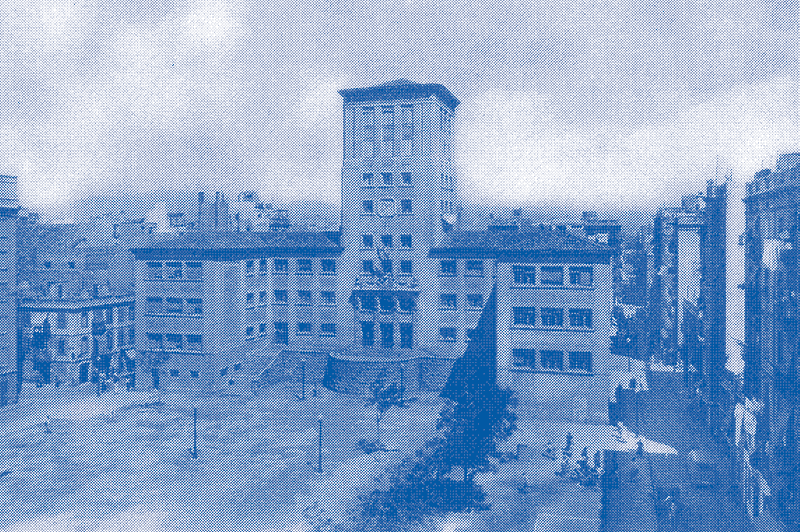
After the war, the neighbourhood had diverse public and private centres, such as the Escola Graduada on carrer Grau i Torras, the Escola Mercantil, the Doña Lola school, the Senyor Gai school and the Ilustre Junta de Damas, among others. In 1951 the Colegio Nacional Virgen del Mar was inaugurated in the plaça del Poeta Boscà ; it separated boys and girls into different classes and was based on the principles of national Catholicism. The building was demolished in 1998.
Main facade of the Mare de Déu del Mar school in Poeta Boscà square (1953-1960). AMDCV-FFPB

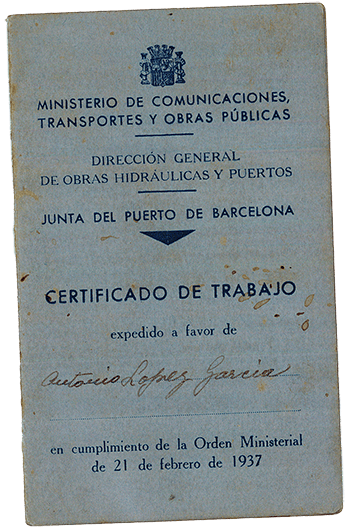
Port worker’s license belonging to Antonio López (1938)
The black market
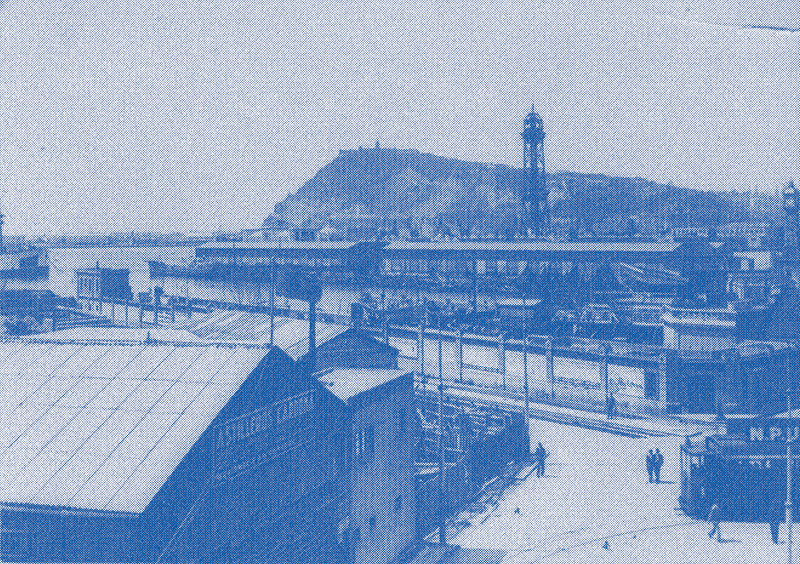
The father of the López-Barber family worked at the port and, making the most of this situation, took part in the phenomenon of the black market, like many other families in the neighbourhood. The end of the Civil War was marked by long periods of scarcity of basic products, and the port of La Barceloneta was one of the main entry points of goods from all over the world. This promoted a black market, beyond the control of the Franco regime, known as estraperlo, which for many working class families meant a way of survival or of achieving a more prosperous situation. The black market declined at the end of the rationing period, in 1952, but it continued to operate to a lesser extent for years.
View of the port of Barceloneta with warehouses and shipyards (1931-1936). AMDCV-FFPB


Miniature fishing boat
Fishing and the marine world
In many rooms in homes in La Barceloneta we find decorative elements related to fishing and the sea, such as this miniature boat. Since its creation, La Barceloneta neighbourhood has been closely related to the port activities, which included the building and repair of boats, the storage of goods and, naturally, fishing.
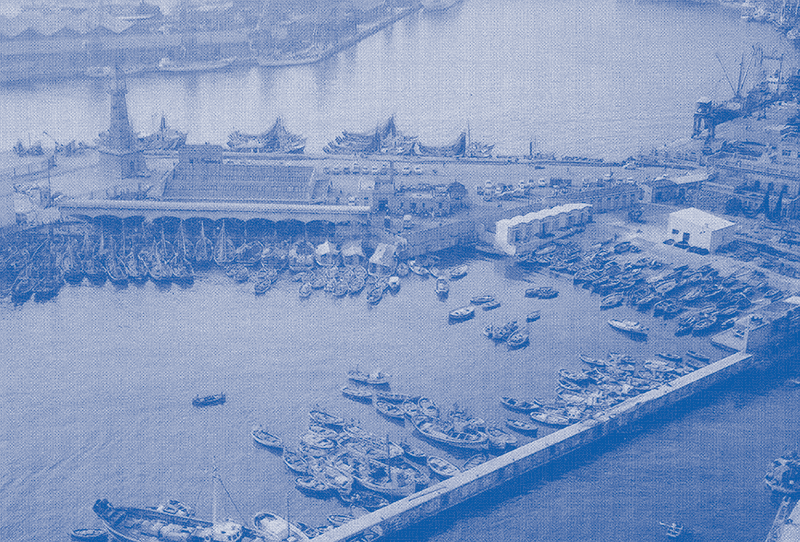
The fishing fleet moored up mainly at the dock around the Torre del Rellotge, but the boats also arrived at the area where the Palau de Mar and the Sant Sebastià beach are located today. Over time, the number of fishing boats decreased and part of the dock was occupied by recreational baths and beach bars. Today at the docks of La Barceloneta 27 fishing boats can still be spotted: 2 small-scale fishing boats, 16 seine fishing boats and 9 trawlers.
View of the Barceloneta pier full of fishing boats and the clock tower in the background (1965-1975). ADCV-FFPB


Old thermometer (from the 1970s)
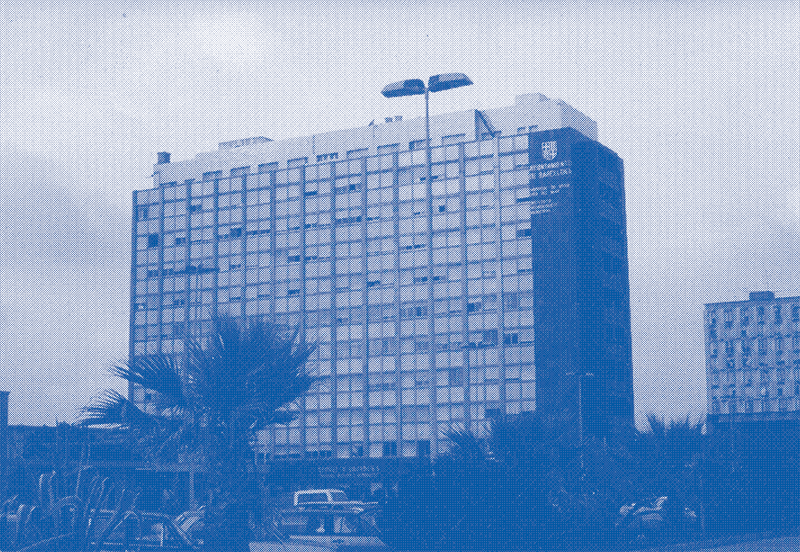
Hospital del Mar
This thermometer from the 1970s is a reminder of the health services that have looked after the residents of La Barceloneta, such as the Hospital del Mar. It started out as the former municipal infectious diseases hospital, created in 1914 in one of the existing pavilions to tackle the serious outbreak of typhoid fever that had hit Barcelona. In 1930 the hospital opened in a new building; during the Civil War it was affected by the Fascist airstrikes and the patients and staff were transferred to Hotel Florida in Tibidabo. During the Franco regime the hospital, renamed as Nuestra Señora del Mar, became a leading health centre with the use of the first iron lung and the creation of the first intensive care unit. When democracy arrived, it became established as a health, teaching and research centre and expanded its facilities to become what is today known as the Parc de Salut MAR.
The ten-storey building of the Neurological Institute of Hospital del Mar (1980). AMDCV-FFPB


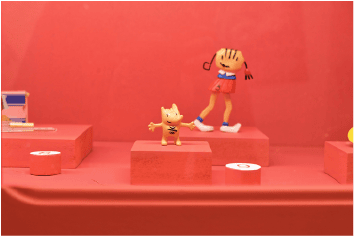
Cobi and Petra, mascots of the 1992 Olympic and Paralympic Games
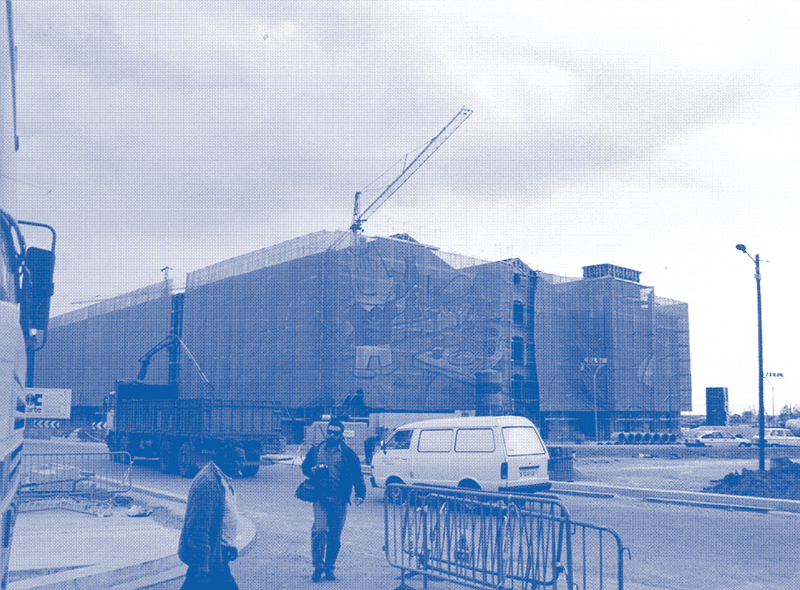
The great urban transformation
In 1986, when Barcelona was selected as the host city of the 1992 Olympic and Paralympic Games, the city underwent a large-scale urban reform. This transformation hugely affected the Barcelona coast through what was known as “obertura al mar†[opening up the city to the sea], which meant demolishing the sheds and beach bars, recovering beaches and reforming large public spaces surrounding La Barceloneta: the plaça de Pau Vila, avinguda del Doctor Aiguder, passeig Joan de Borbó, the old port and passeig MarÃtim. More open areas were created in the more interior part of the neighbourhood with the creation of new squares and the renovation of existing ones, such as plaça de Pompeu Gener, plaça d’Hilari Salvadó —dedicated to the mayor of Barcelona during the Civil War and resident of the neighbourhood—, plaça de La Barceloneta and plaça del Poeta Boscà (“la Replaâ€).
Works at former docklands’ building, which today hosts the History Museum of Catalonia (1990). AMDCV-FFPB

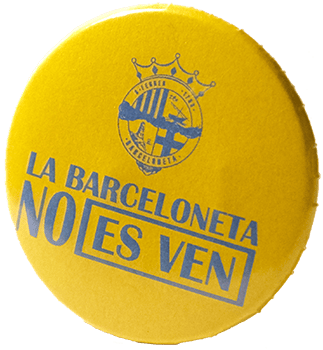
Badge from a campaign against speculation in the district (2017)
The neighbourhood movement
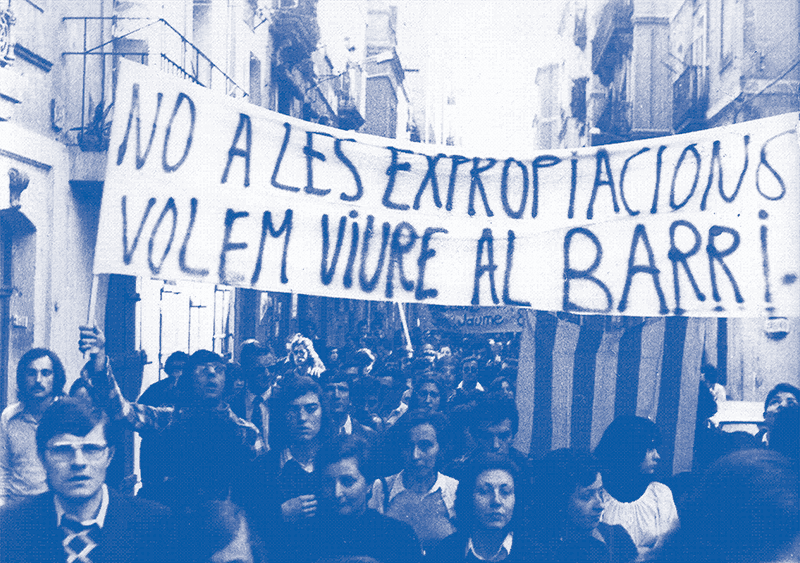
This badge is the symbol of one of the last big campaigns by the residents’ movement in defence of their neighbourhood, in 2017. From the 1960s onwards, residents’ associations started to appear all across Barcelona and they gradually became a school of democracy that clashed with the interests of the dictatorship. In 1969, La Barceloneta was affected by the mayor Porcioles’ pla de la Ribera, an urban renovation plan that speculated on land along the seafront, and this marked a turning point for the residents of La Barceloneta, who opposed it and managed to repeal it.
Today the residents’ association of La Barceloneta and l’Òstia and other platforms such as “La Barceloneta diu prou†and the Associació Barceloneta Alerta are fighting to preserve the neighbourhood’s identity in the face of a harmful tourism model that has led to an increase in the price of housing and the transformation of many businesses for tourism purposes.
Neighbors demonstrating in the streets of Barceloneta (1976). AMDCV-FFPB
CREDITS
Curator: Oriol López Badell
Research and documentation: Jesús Floro
Conceptualization and graphic design: Arauna Studio
Web design: Carles Mestre
Correction of texts: Vicenç Benéitez
Translation of texts: Subtil
Archive photographs:
Arxiu Fotogrà fic de Barcelona (AFB)
Arxiu Municipal de Ciutat Vella (AMCV)
Fons Fotogrà fic Popular de la Barceloneta (FFPB)
Â
ACKNOWLEDGEMENTS
Antoni López Barber, López-Badell family, Barceloneta-La Fraternitat Library