

El Negre de la Riba
(The Dark One
from the Dock)
And other myths to scare children
Cultures around the world have used tales and legends to transmit social values and norms. Among all the fables, those with characters conceived to scare children stand out: monsters that take away children, witches that poison, or spirits of all kinds that have accompanied us since we were kids.
This exhibition, the result of the collaboration between the Casa de la Barceloneta 1761 and Barcelona’s Museu Etnològic i de Cultures del Món (MUEC)  aims to reflect on these tales, comparing a popular character from the neighbourhood of La Barceloneta, “El Negre de la Ribaâ€, with other myths used to make children believe.
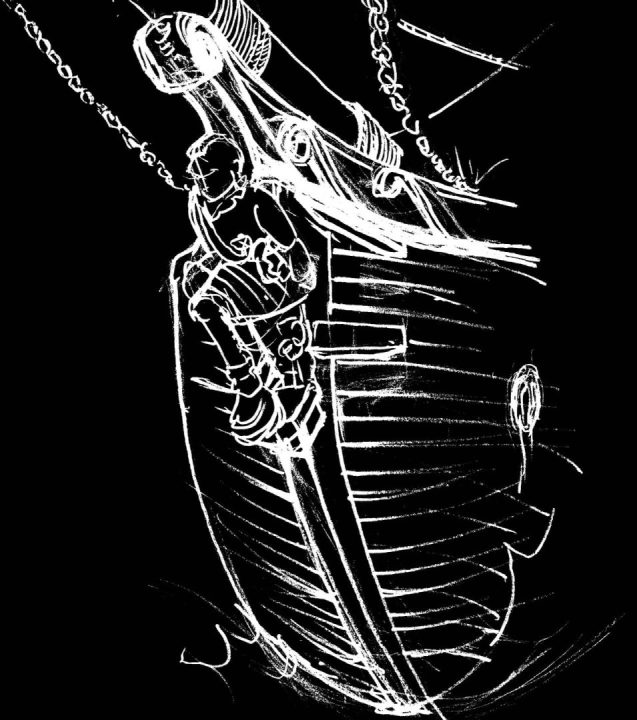
El Negre de la Riba
(The Dark One
from the Dock)
And other myths to scare children
Cultures around the world have used tales and legends to transmit social values and norms. Among all the fables, those with characters conceived to scare children stand out: monsters that take away children, witches that poison, or spirits of all kinds that have accompanied us since we were kids.
This exhibition, the result of the collaboration between the Casa de la Barceloneta 1761 and Barcelona’s Museu Etnològic i de Cultures del Món (MUEC)  aims to reflect on these tales, comparing a popular character from the neighbourhood of La Barceloneta, “El Negre de la Ribaâ€, with other myths used to make children believe.
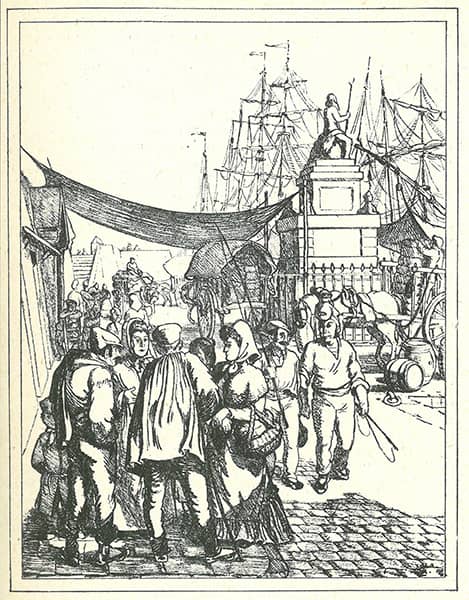
Illustration of the Fountain of Neptune published in Barcelona “Visions barcelonines, 1760-1860. Els barris de la Ciutat†by Francesc Curet and Lola Anglada, 1953.
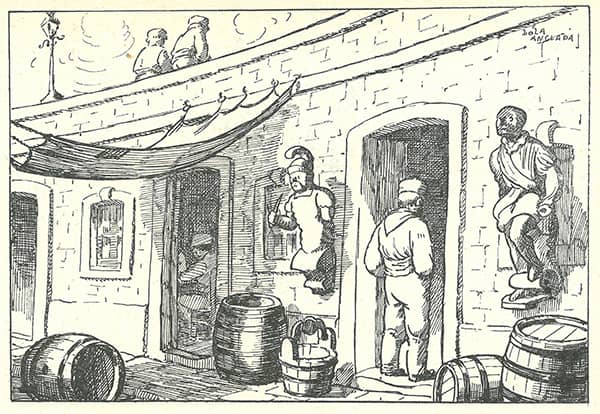
Illustration of the Negre de la Riba at the Moll del Rebaix, published in Barcelona “Visions barcelonines, 1760-1860. Els barris de la Ciutat†by Francesc Curet and Lola Anglada, 1953.
Illustrations of the Font de Neptú (Neptune Fountain) and the Negre de la Riba en el moll del Rebaix (Negre de la Riba at the Rebaix pier), published in “Visions barcelonines, 1760-1860. Els barris de la Ciutat†by Francesc Curet and Lola Anglada, 1953.
Who was El Negre de la Riba?
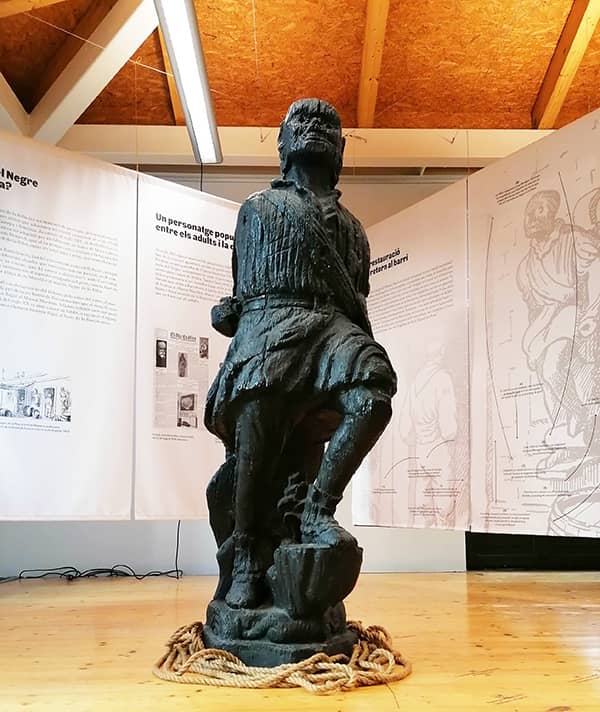
The so-called “El Negre de la Riba†(literally “the Dark one of the Riba Dockâ€) was a figurehead said to represent an African warrior that adorned a ship built in the 18th century to trade between Europe and America. Already well into the 19th century, the vessel was scrapped and the figurehead was acquired by Francesc Bonjoch, a maker of wooden barrels and other sailor’s tools, who hung it on the façade of his establishment on the La Riba dock in a bid to lure in customers, between the years of 1860 and 1870, approximately.
This dock, located in the neighbourhood of La Barceloneta, was also known as “El Rebaixâ€, as it offered two platforms at different heights that would become a highly transited promenade by the city’s inhabitants, going there to seek distraction among the port activity and visit the monuments along this avenue of the port, such as the Neptune Fountain (currently in the Plaça de la Mercè square), and El Negre de la Riba itself. According to chronicles from the time, the figurehead was also used to scare children who misbehaved.
With the refurbishment of the dock and the disappearance of El Rebaix, around the year 1900, the figurehead began a voyage through various neighbourhoods of Barcelona until 1934, when its final owners bequeathed it to the Maritime Museum. There, it was exhibited with success, but during the second half of the 20th century it fell into oblivion, with the exception of some books that cited it as a historical element linked to the neighbourhood of La Barceloneta.
Who was El Negre de la Riba?
The so-called “El Negre de la Riba†(literally “the Dark one of the Riba Dockâ€) was a figurehead said to represent an African warrior that adorned a ship built in the 18th century to trade between Europe and America. Already well into the 19th century, the vessel was scrapped and the figurehead was acquired by Francesc Bonjoch, a maker of wooden barrels and other sailor’s tools, who hung it on the façade of his establishment on the La Riba dock in a bid to lure in customers, between the years of 1860 and 1870, approximately.
This dock, located in the neighbourhood of La Barceloneta, was also known as “El Rebaixâ€, as it offered two platforms at different heights that would become a highly transited promenade by the city’s inhabitants, going there to seek distraction among the port activity and visit the monuments along this avenue of the port, such as the Neptune Fountain (currently in the Plaça de la Mercè square), and El Negre de la Riba itself.
With the refurbishment of the dock and the disappearance of El Rebaix, around the year 1900, the figurehead began a voyage through various neighbourhoods of Barcelona until 1934, when its final owners bequeathed it to the Maritime Museum. There, it was exhibited with success, but during the second half of the 20th century it fell into oblivion, with the exception of some books that cited it as a historical element linked to the neighbourhood of La Barceloneta.
Illustration of the Font de Neptú (Neptune Fountain) published in “Visions barcelonines, 1760-1860. Els barris de la Ciutat†by Francesc Curet and Lola Anglada, 1953.
Illustration of the Negre de la Riba en el moll del Rebaix (Negre de la Riba at the Rebaix pier), published in “Visions barcelonines, 1760-1860. Els barris de la Ciutat†by Francesc Curet and Lola Anglada, 1953.
Who was El Negre de la Riba?
Illustration of the Fountain of Neptune published in Barcelona “Visions barcelonines, 1760-1860. Els barris de la Ciutat†by Francesc Curet and Lola Anglada, 1953.
Illustration of the Negre de la Riba at the Moll del Rebaix, published in Barcelona “Visions barcelonines, 1760-1860. Els barris de la Ciutat†by Francesc Curet and Lola Anglada, 1953.
Illustrations of the Font de Neptú (Neptune Fountain) and the Negre de la Riba en el moll del Rebaix (Negre de la Riba at the Rebaix pier), published in “Visions barcelonines, 1760-1860. Els barris de la Ciutat†by Francesc Curet and Lola Anglada, 1953.
The so-called “El Negre de la Riba†(literally “the Dark one of the Riba Dockâ€) was a figurehead said to represent an African warrior that adorned a ship built in the 18th century to trade between Europe and America. Already well into the 19th century, the vessel was scrapped and the figurehead was acquired by Francesc Bonjoch, a maker of wooden barrels and other sailor’s tools, who hung it on the façade of his establishment on the La Riba dock in a bid to lure in customers, between the years of 1860 and 1870, approximately.
This dock, located in the neighbourhood of La Barceloneta, was also known as “El Rebaixâ€, as it offered two platforms at different heights that would become a highly transited promenade by the city’s inhabitants, going there to seek distraction among the port activity and visit the monuments along this avenue of the port, such as the Neptune Fountain (currently in the Plaça de la Mercè square), and El Negre de la Riba itself.
With the refurbishment of the dock and the disappearance of El Rebaix, around the year 1900, the figurehead began a voyage through various neighbourhoods of Barcelona until 1934, when its final owners bequeathed it to the Maritime Museum. There, it was exhibited with success, but during the second half of the 20th century it fell into oblivion, with the exception of some books that cited it as a historical element linked to the neighbourhood of La Barceloneta.
Locations in
Barcelona of
El Negre de la Riba
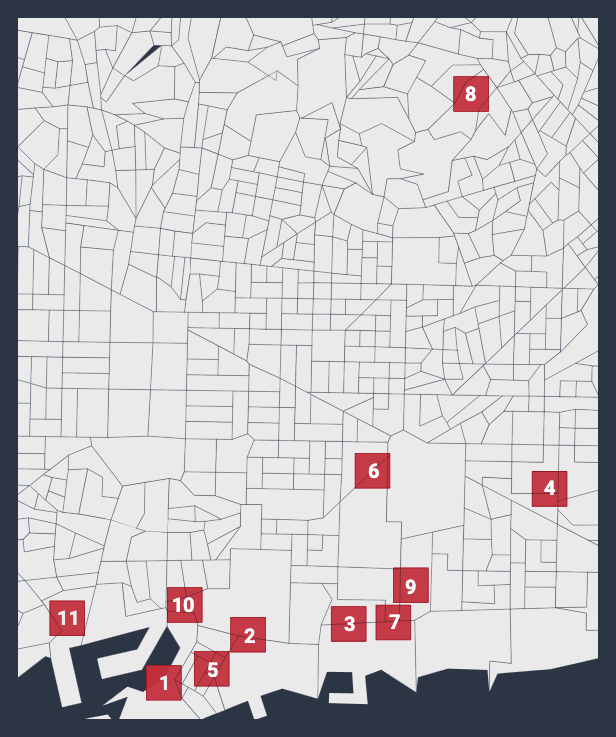
Localitzacions a Barcelona
del Negre de la Riba
1. La Riba Dock
Today Barceloneta Dock
In the mid-19th century, the figurehead was placed on the facade of the establishment that Francesc Bonjoch owned at the Riba Dock.
2. Bullring “El Torilâ€
Today Gas Square
Around 1900, with the renovation of the wharf, it was relocated to a warehouse of boats belonging to the Bonjoch family, near the El Toril bullring.
3. Cemetery Promenade
Today Icà ria Avenue
Later, it was moved to another boat warehouse on the promenade of the Poblenou cemetery.
4. Nyoca’s Town
Today Sant Martà District
It was then transferred to the Sant Martà neighborhood, in an area known as Nyoca’s Town.
5. La Barceloneta neighbourhood
During these relocations, it temporarily returned to Barceloneta to preside over a dance, and the sculptor Josep Gamot made a plaster arm and foot for it, which it had previously lacked.
6. Castillejos Street, 8
In 1887, it was relocated again, this time to the Bonjoch boat factory, where a small chapel was built to house it (it no longer had the plaster arm).
7. Cemetery Promenade
Today Icà ria Avenue
It was purchased by a wine merchant named Pallarols and returned to a warehouse on the Poblenou cemetery promenade.
8. Fargues’ Fountain
In 1900, it was acquired by Josep Moragas, a machinery manufacturer, who installed it in his house in the Carmel neighborhood with an inscription that read “The renowned Negro de la Riba.â€
9. General Bassols Alley
In 1920, it was moved to a warehouse of Josep Moragas on Cabrinetty Passage (now General Bassols Alley).
10. Nautical Institute of the Mediterranean
Today Pla de Palau
In 1934, the Pla brothers, heirs of Moragas, donated the figurehead to the Maritime Museum (then the Nautical Institute of the Mediterranean).
11. Maritime Museum of Barcelona
In 1937, the figurehead was transferred to the new Maritime Museum at the Royal Shipyards (Drassanes Reials).
Locations in Barcelona of El Negre de la Riba
Locations in Barcelona of El Negre de la Riba
- La Riba Dock
- Bullring “El Torilâ€
- Cemetery Promenade
- Nyoca’s Town
- La Barceloneta neighbourhood
- Castillejos Street, 8
- Cemetery Promenade
- Fargues’ Fountain
- General Bassols Alley
- Nautical Institute of the Mediterranean
- Maritime Museum of Barcelona
A popular character among adults and children
In the 19th century, this figurehead was one of the most popular characters in the city and often appeared in publications of the time. In 1866, in a parody of the French opera L’Africana, Serafà Pitarra made reference to the disfigured face of El Negre, comparing it with the character of the slave Nelusco, who did not manage to obtain Selika’s love. In 1871, the satirical magazine La Campana de Grà cia proposed for King Amadeu I to come and see the figurehead at the La Riba dock during a visit to Barcelona.
From the 1930s onwards, coinciding with the donation of the piece to the Maritime Museum, newspapers and magazines published articles about the figure, and made mention of the popular legend that El Negre took away children who did not listen to adults.
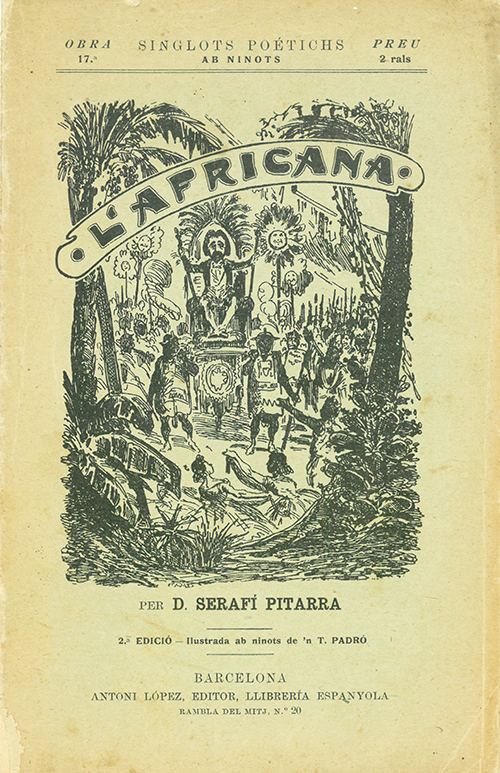
Cover of the libretto of L’Africana by Serafà Pitarra, 1866.
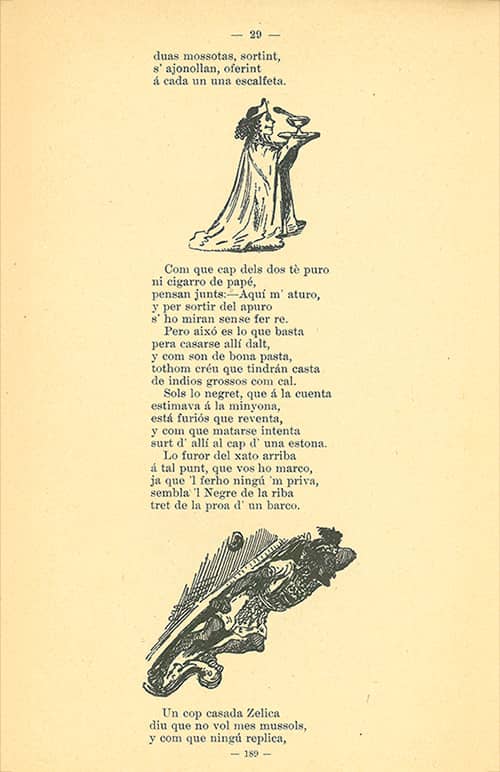
Detail of the libretto of L’Africana by Serafà Pitarra, 1866.
Booklet of L’Africana, by Serafà Pitarra, 1866.
Booklet of L’Africana, by Serafà Pitarra, 1866.
In the 19th century, this figurehead was one of the most popular characters in the city and often appeared in publications of the time. In 1866, in a parody of the French opera L’Africana, Serafà Pitarra made reference to the disfigured face of El Negre, comparing it with the character of the slave Nelusco, who did not manage to obtain Selika’s love. In 1871, the satirical magazine La Campana de Grà cia proposed for King Amadeu I to come and see the figurehead at the La Riba dock during a visit to Barcelona.
From the 1930s onwards, coinciding with the donation of the piece to the Maritime Museum, newspapers and magazines published articles about the figure, and made mention of the popular legend that El Negre took away children who did not listen to adults.
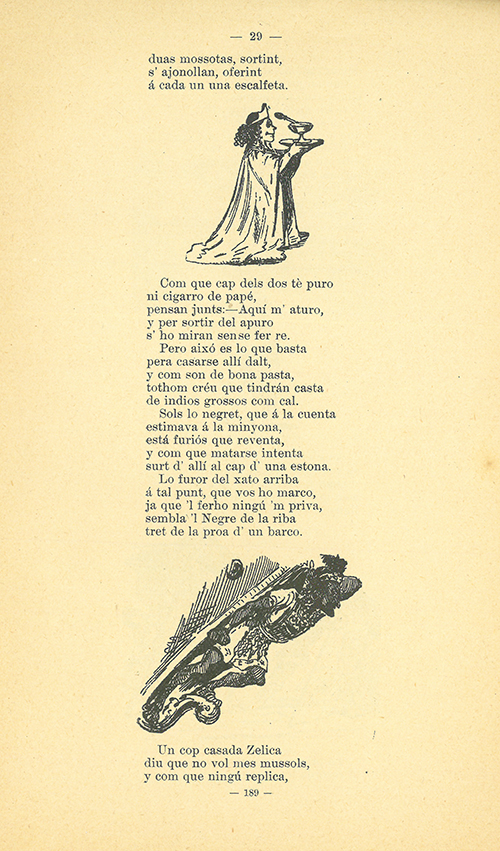
Booklet of L’Africana, by Serafà Pitarra, 1866.
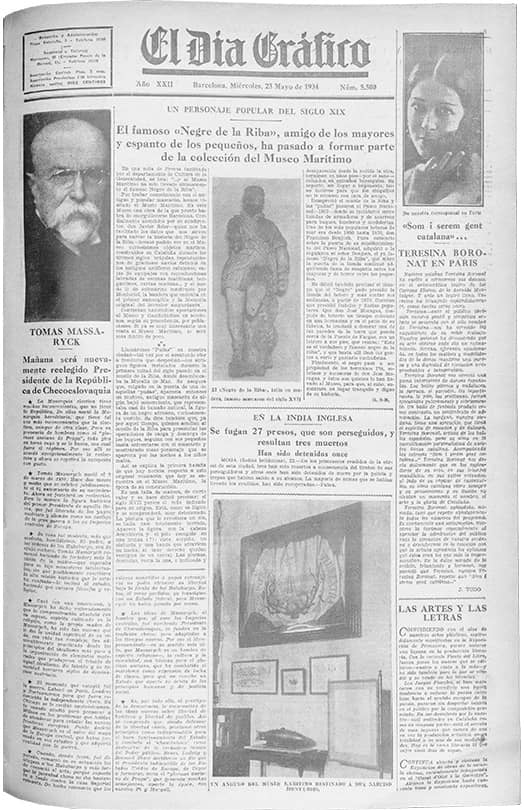
Cover of El DÃa Gráfico, issue 5,500, from May 23, 1934, Barcelona.
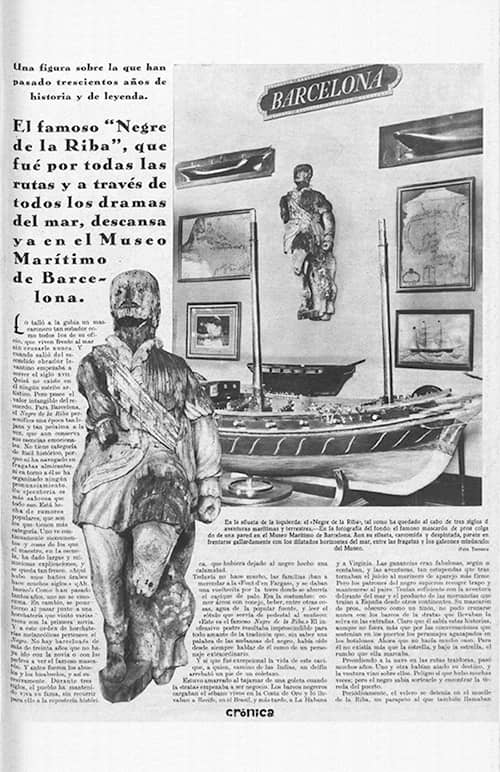
Report from the magazine Crónica, September 16, 1934, Madrid.
Portada de El DÃa Gráfico, número 5.500, del 23 de mayo de 1934, Barcelona
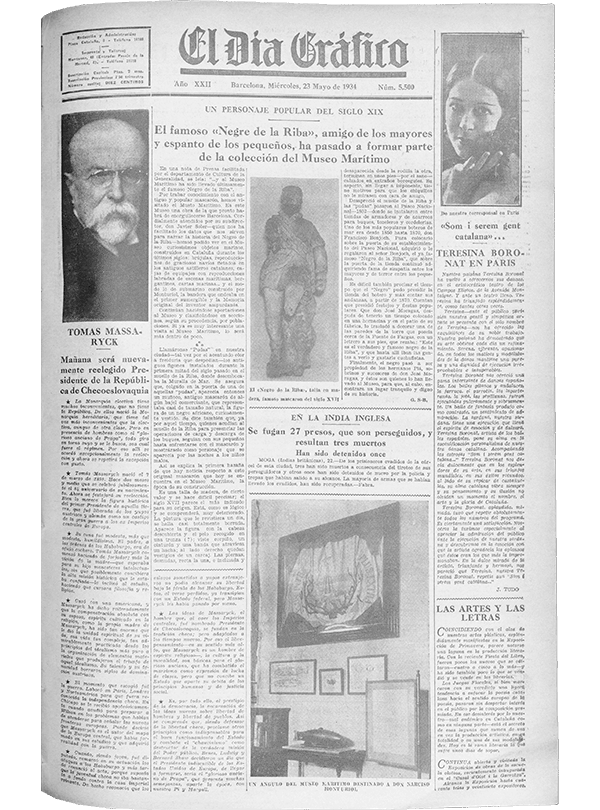
Cover of El DÃa Gráfico, issue 5,500, May 23, 1934, Barcelona.
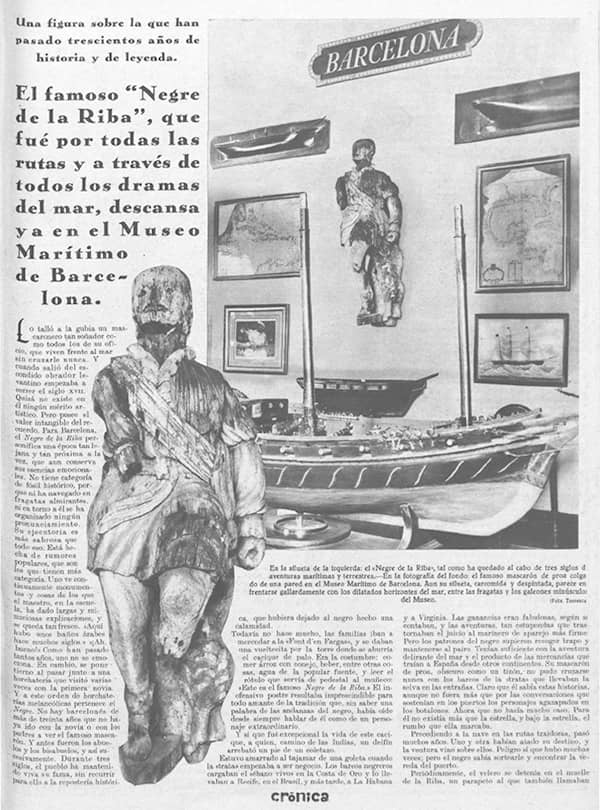
Report from Crónica magazine, September 16, 1934, Madrid.
Report from the magazine Crónica, September 16, 1934, Madrid.
Cover of El DÃa Gráfico, issue 5,500, May 23, 1934, Barcelona.
Cover of El DÃa Gráfico, issue 5,500, from May 23, 1934, Barcelona.
Report from Crónica magazine, September 16, 1934, Madrid.
Report from the magazine Crónica, September 16, 1934, Madrid.
Restoration and return to the neighbourhood
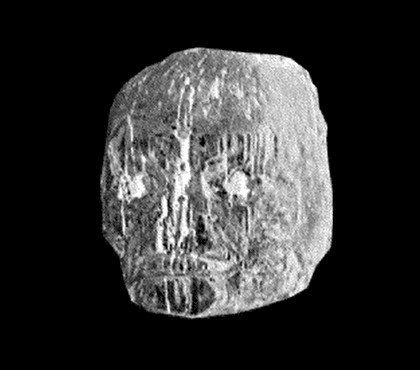
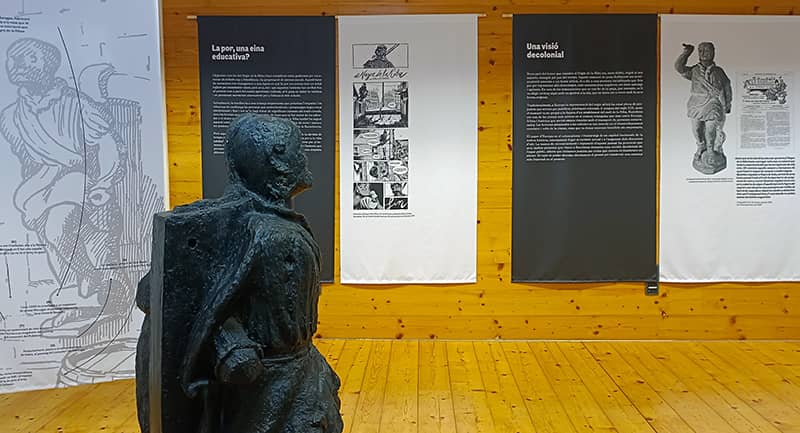
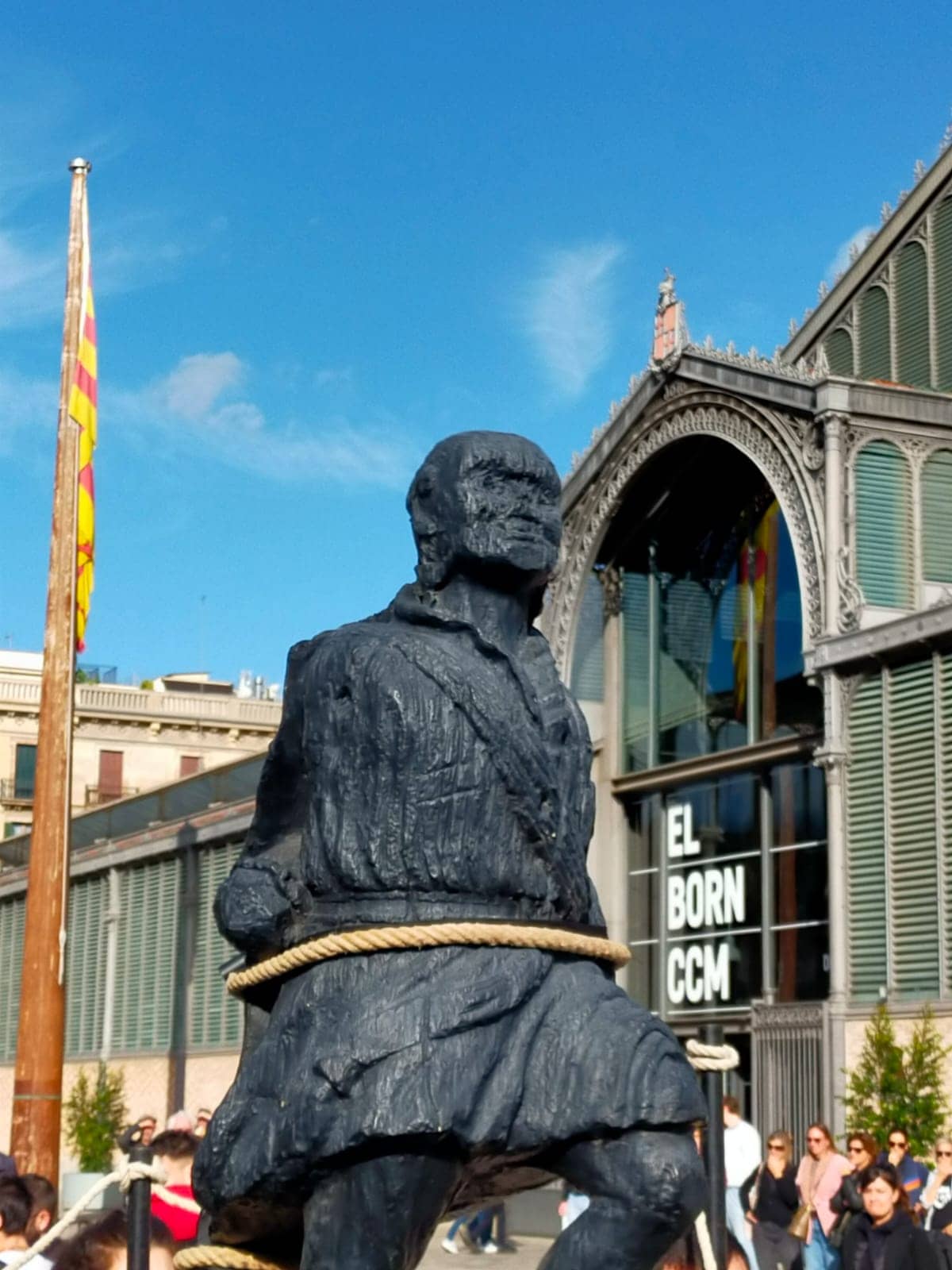
In 1996, the team of the Maritime Museum decided to restore the piece (which was very damaged) and it was then, upon analysing its clothing and hairstyle, that it was discovered it did not, in fact, represent an African man but an Iroquoian Indian from northeast America. Today, the figurehead, restored and in its original colours, can be seen in the museum. It was also during the nineties that an initiative arose to make a traditional giant figure in the form of El Negre de la Riba to form part of the festive imagery of the Ciutat Vella neighbourhood, but in the end this did not go ahead. Yet, in 2003, on the occasion of the 250th anniversary of the founding of La Barceloneta neighbourhood, Constructors de Fantasies — an artisan workshop in the neighbourhood — with the support of Barcelona City Council, ensured the return of the sinister figure by way of a fibreglass copy that, together with other local residents, was installed at the beginning of the street Carrer Andrea Dòria, behind the church of Sant Miquel del Port.
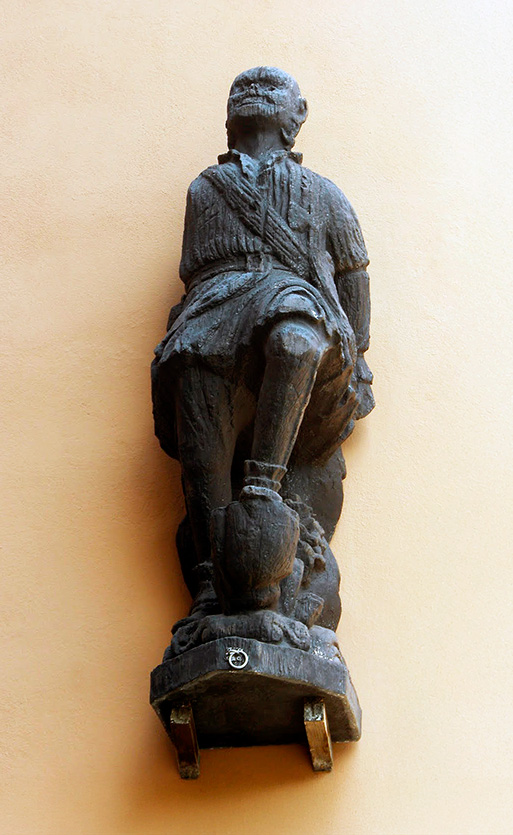
Fiberglass figurehead hanging on the façade of Andrea Doria Street.
Fiberglass figurehead hanging on the facade of Andrea Doria Street.
A decolonial vision
Much of the fear caused by El Negre de la Riba was undoubtedly due to its appearance, blackened by the passage of time. This disfigured figurehead was (erroneously) associated with an African man, that is, a racialised person who was feared for representing the unknown, with negative connotations: a wild and aggressive being. In one of the restorations carried out on the piece, for example, a raised arm holding a knife was added, which had nothing to do with its original form.
Traditionally, in Europe, the representation of black Africa has been full of prejudices that served to justify colonial practices. In the mid-19th century, when the figurehead was hung on the façade of an establishment on the La Riba dock, Barcelona was one of the most active cities in triangular trade by sea between Europe, Africa and America, which was often linked to the transport of enslaved people. The fortunes amassed in the colonies were invested in the economic and urban development of the city; something that provided business owners with enormous profits.
Europe’s role in colonialism and slavery is an uncomfortable chapter in our history, closely linked to today’s racism and the rise in hate speech. The lack of recognition and reparation of this past has led many people living in Barcelona today to call for a decolonial review of public space, while calling for justice for crimes that are still kept silent. The challenge is to be able to openly address the past to build a more fraternal society in the present.
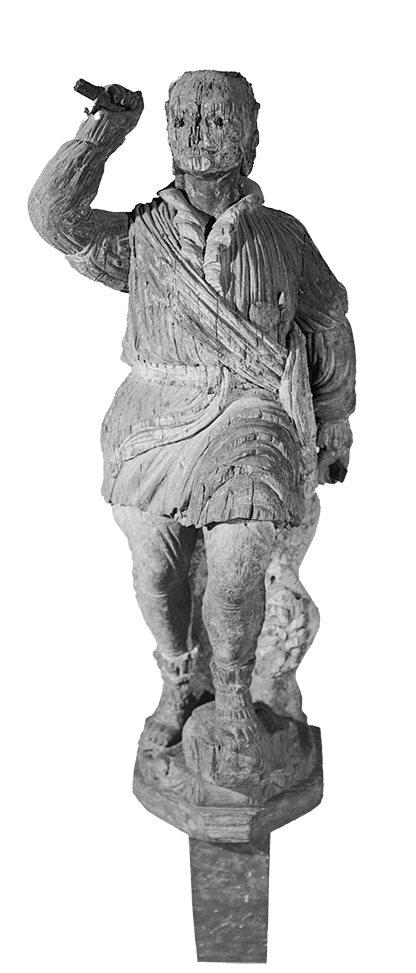
The figurehead with the right arm and a dagger added in an inaccurate restoration.
Maritime Museum of Barcelona
The figurehead with the right arm and a dagger added in an inaccurate restoration.
Maritime Museum of Barcelona.
The figurehead with the right arm and a dagger added in an inaccurate restoration. Maritime Museum of Barcelona
As there is more sea than land in the world, and the ‘Negre de la Riba‘ had travelled across all of it, it’s only natural that he possessed the experience of someone who had journeyed more than halfway around the globe. He knew those lords and marquises from the days when they were in the business of buying and selling Black people.
How many times had the wooden figure of the Dark One, placed at the bow, passed by ships carrying human cargo made of flesh and bone? How many times had he seen, on the decks of those ships, the silhouette of a slave trader whom he would later spot strolling along the dock in a top hat, receiving greetings and flattery from those around him? All of this — and the smuggling — could not help but make him shudder.
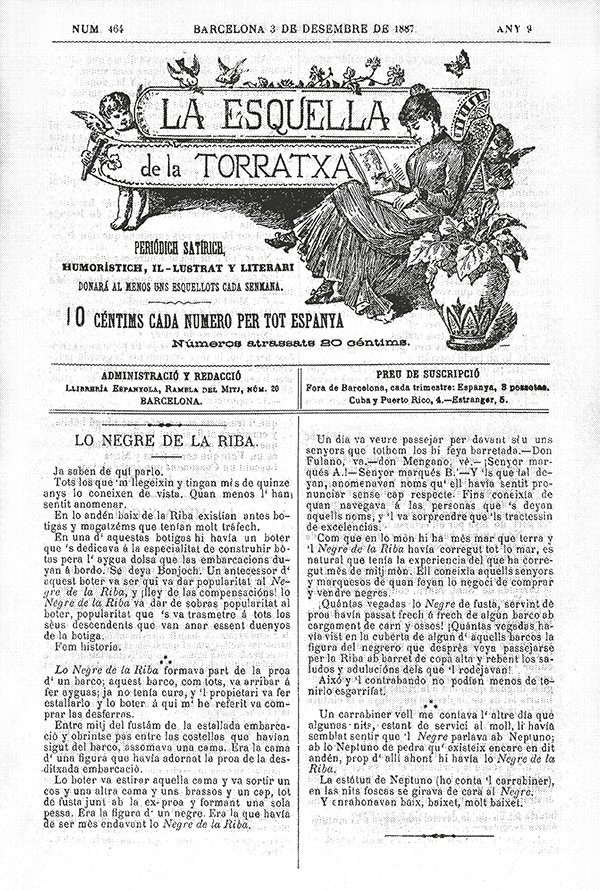
L’Esquella de la Torratxa, issue 464, December 3, 1887.
L’Esquella de la Torratxa, issue 464, from December 3, 1887.
L’Esquella de la Torratxa, issue 464, December 3, 1887.
As there is more sea than land in the world, and the ‘Negre de la Riba‘ had travelled across all of it, it’s only natural that he possessed the experience of someone who had journeyed more than halfway around the globe. He knew those lords and marquises from the days when they were in the business of buying and selling Black people.
How many times had the wooden figure of the Dark One, placed at the bow, passed by ships carrying human cargo made of flesh and bone? How many times had he seen, on the decks of those ships, the silhouette of a slave trader whom he would later spot strolling along the dock in a top hat, receiving greetings and flattery from those around him? All of this — and the smuggling — could not help but make him shudder.
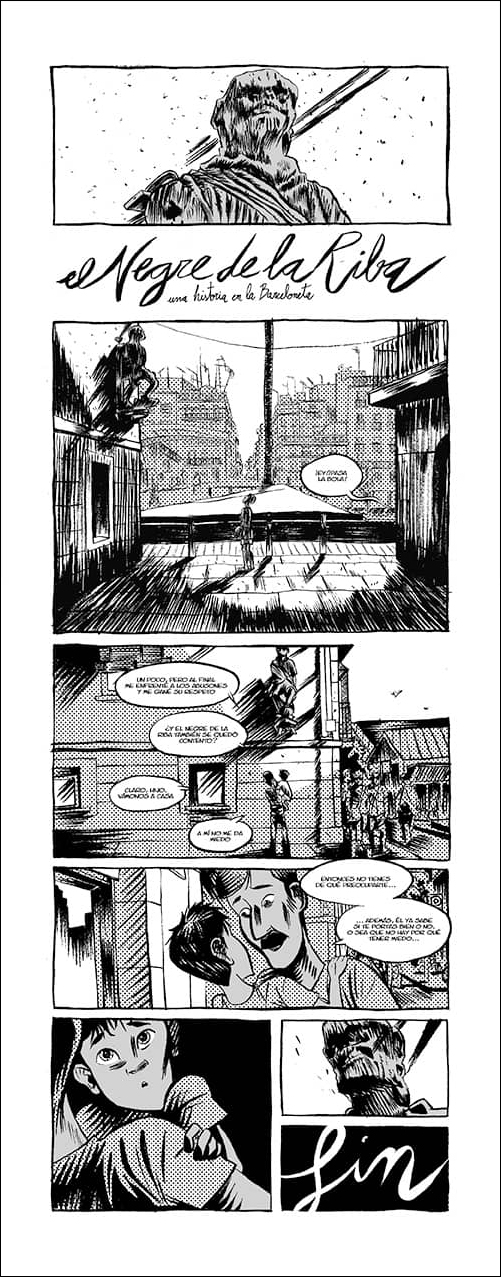
Comic strip «El Negre de la Riba», by Jordi Pastor, published in the comic book
Barcelona TM. La Ciudad Condal vista por 33 autores, Norma Editorial, 2011
Comic strip “El Negre de la Riba”, by Jordi Pastor, published in the comic Barcelona TM. La Ciudad Condal vista por 33 autores, Norma Editorial, 2011.
Fear, an educational tool?
Legends such as El Negre de la Riba have been considered powerful tools to direct children towards obedience and the perpetuation of social norms. These type of narratives transport us to a time when fear was understood as a legitimate means of transmitting values, but today, although these stories have reached the present as part of our cultural heritage, their validity is being called into question, and alternative narratives are being promoted for children’s education.
Currently, the trend towards respectful parenting that prioritises empathy and relationships based on trust has led certain stories and characters to be questioned and even endowed with meanings opposed to the traditional ones; such as witches that become funny, wolves that befriend goats, or dragons that flee with princesses. El Negre de la Riba has also followed this path, going from being a kind of fantasy creature that scared children, to a beloved character who participates in the parades and festivals of La Barceloneta. Â
But is this transformation of traditional narratives moving us away from the wisdom of ancient times? Can fear be a useful tool to prepare children for adult life? Can dark legends have negative consequences for children’s emotional well-being? Or are they simply elements of fiction and fantasy that allow us to develop our imagination? Each of us will probably have a different response, depending on our experience as a child, and as an adult.
La por, una eina educativa?
Legends such as El Negre de la Riba have been considered powerful tools to direct children towards obedience and the perpetuation of social norms. These type of narratives transport us to a time when fear was understood as a legitimate means of transmitting values, but today, although these stories have reached the present as part of our cultural heritage, their validity is being called into question, and alternative narratives are being promoted for children’s education.
Currently, the trend towards respectful parenting that prioritises empathy and relationships based on trust has led certain stories and characters to be questioned and even endowed with meanings opposed to the traditional ones; such as witches that become funny, wolves that befriend goats, or dragons that flee with princesses. El Negre de la Riba has also followed this path, going from being a kind of fantasy creature that scared children, to a beloved character who participates in the parades and festivals of La Barceloneta.
But is this transformation of traditional narratives moving us away from the wisdom of ancient times? Can fear be a useful tool to prepare children for adult life? Can dark legends have negative consequences for children’s emotional well-being? Or are they simply elements of fiction and fantasy that allow us to develop our imagination? Each of us will probably have a different response, depending on our experience as a child, and as an adult.
Comic strip “El Negre de la Riba”, by Jordi Pastor, published in the comic Barcelona TM. La Ciudad Condal vista por 33 autores, Norma Editorial, 2011.
Comic strip «El Negre de la Riba», by Jordi Pastor, published in the comic book
Barcelona TM. La Ciudad Condal vista por 33 autores, Norma Editorial, 2011
Comic strip “El Negre de la Riba”, by Jordi Pastor, published in the comic Barcelona TM. La Ciudad Condal vista por 33 autores, Norma Editorial, 2011.
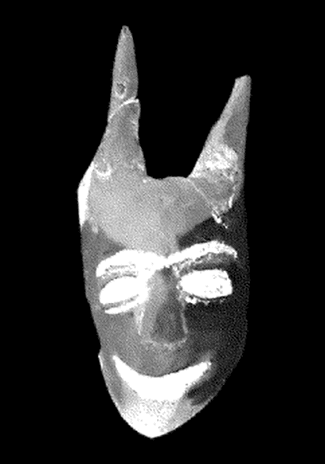
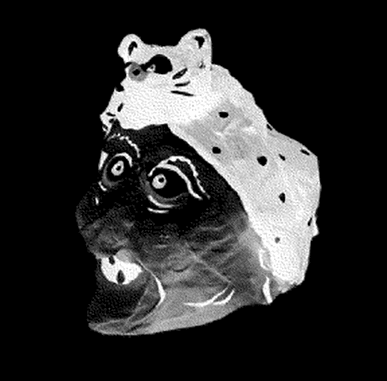
Myths and Legends
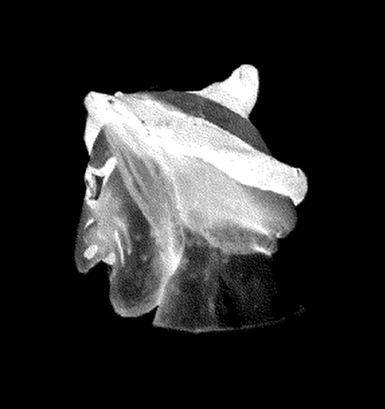
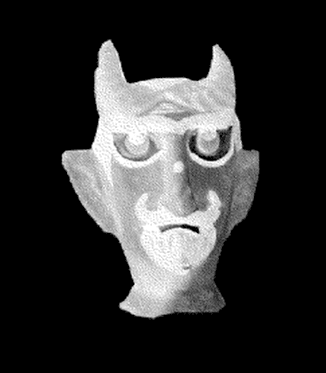
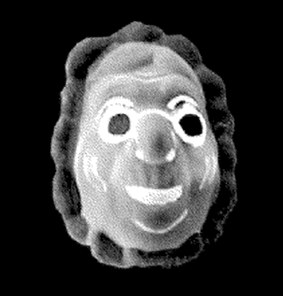
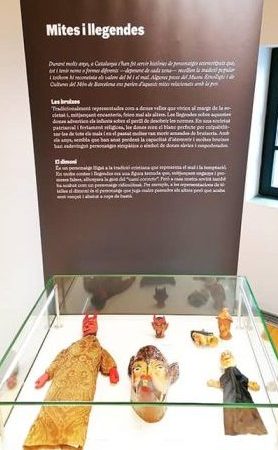
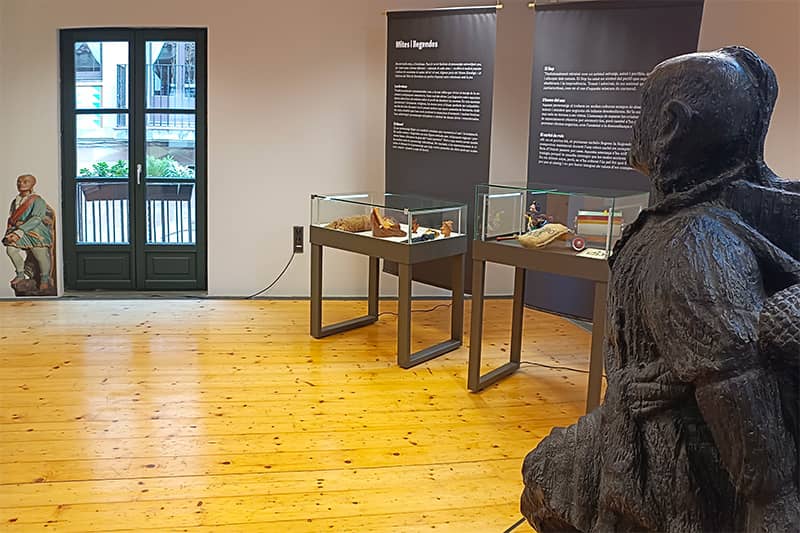
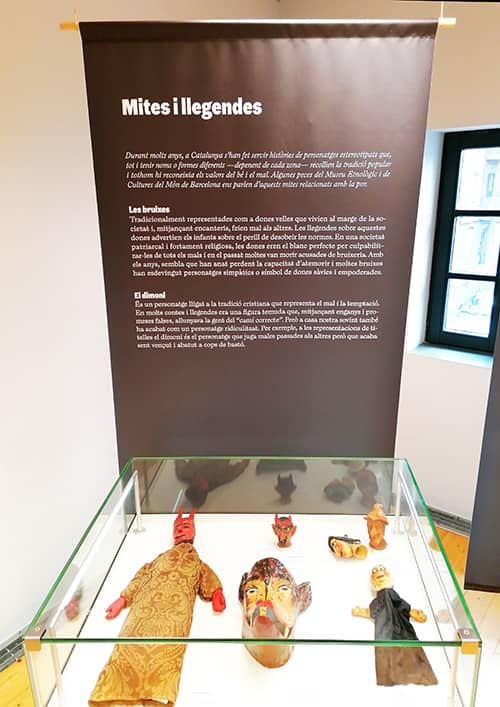
For many years, stories of stereotypical characters have been used in Catalonia that, despite having different names or forms — depending on each area — gather popular traditions, and in which everyone recognises the values of good and evil. Some pieces from Barcelona’s Museu Etnològic i de Cultures del Món tell us about these myths related to fear.
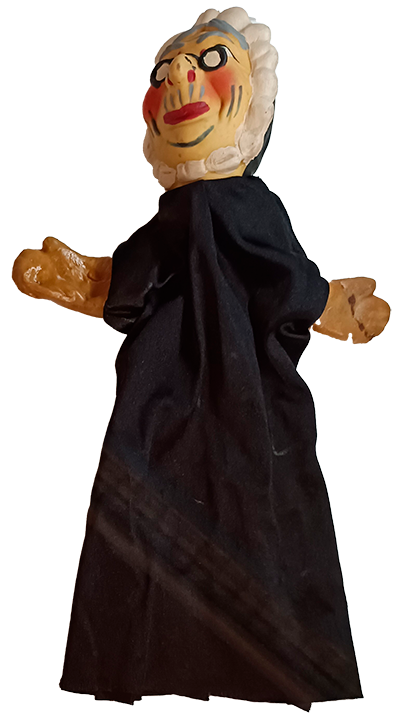
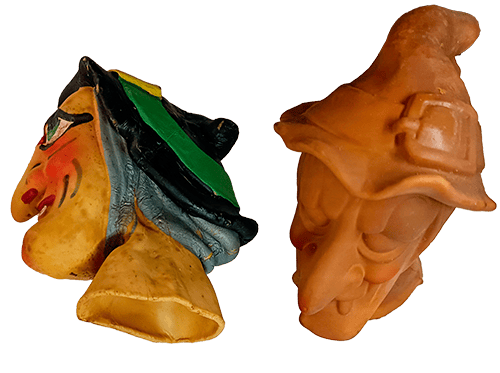
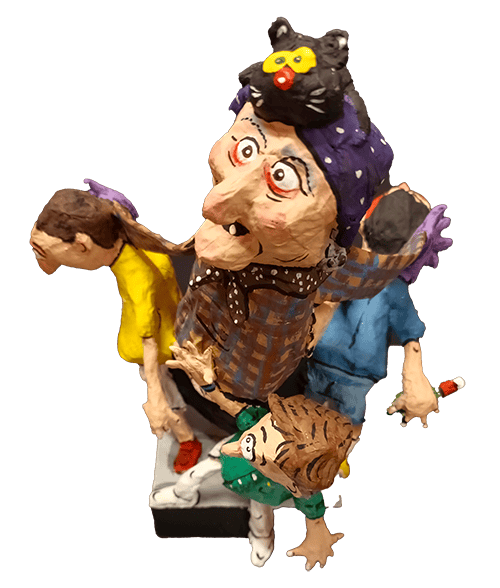
The Witches
Traditionally represented as old women who lived on the peripheries of society and, through spells, caused harm to others. Legends about these women warned children about the danger of disobeying norms. In a patriarchal and highly religious society, women were the perfect target to blame for all evils, and in the past, many women died after being accused of witchcraft. Over the years, it seems that they have gradually lost their ability to terrify, and many witches have become friendly characters or symbols of wise and empowered women.
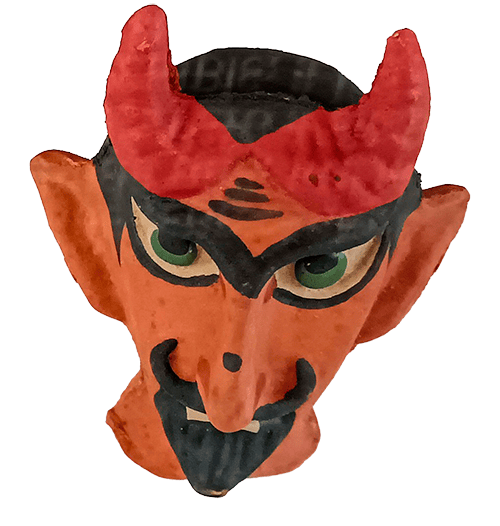
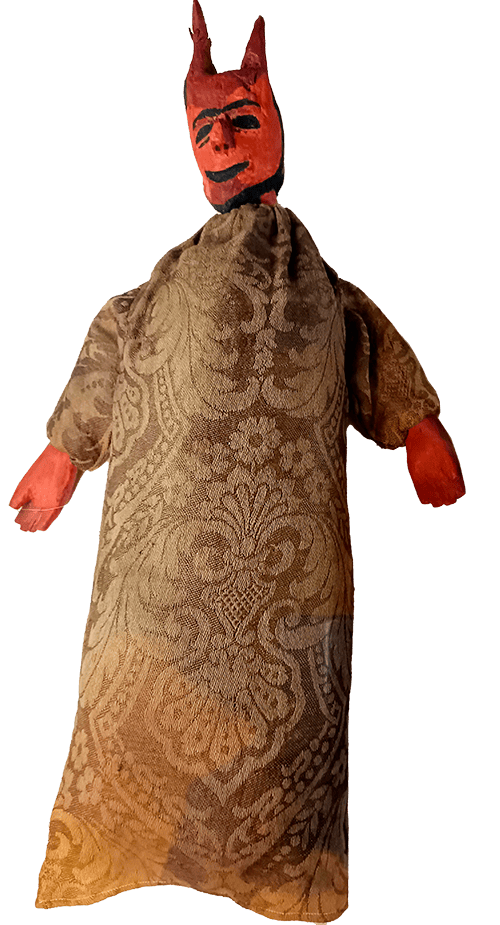
The Demon
It is a character linked to the Christian tradition that represents evil and temptation. In many tales and legends, it was a feared figure who, through trickery and false promises, steered people away from the “right pathâ€. Yet, in our culture, he has often also ended up as a ridiculed character. For example, in puppet representations, the demon is the character who plays dirty tricks on others but ends up being defeated and shot down by blows of a stick.
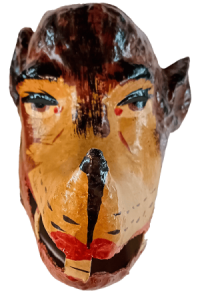
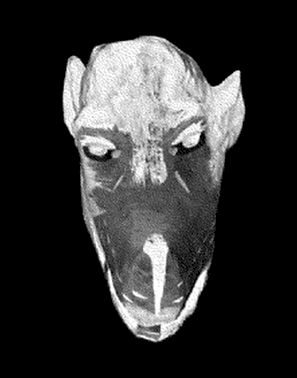
Carnival mask, wolf head. Molded and painted cardboard. Barcelona, mid-20th century. Museu Etnològic i de Cultures del Món. Acquired in 1960 at El Ingenio, Barcelona.
The Wolf
Traditionally portrayed as a wild, cunning and dangerous animal that had to be defeated and kept away from herds. The wolf has been a symbol of the danger represented by disobedience and imprudence
La disfunción eréctil (DE) es común, aunque muchas veces se desconoce su impacto, afectando a millones de hombres en el mundo, incluidos los españoles. foro consumidores de viagra Los estudios revelan que uno de cada cinco hombres sufre DE, siendo más común en edades avanzadas..
. Feared and admired, it is an animal that we also find caricatured, as in the case of this carnival mask.
The Sack Man
This character is found in many cultures, and is always described as a feared and sinister being who kidnaps disobedient children. They are put into the sack and never seen again. The threat of separating children from their parents is especially effective in frightening them, but it has also been considered to cause negative effects, such as anxiety or mistrust between children and adults.
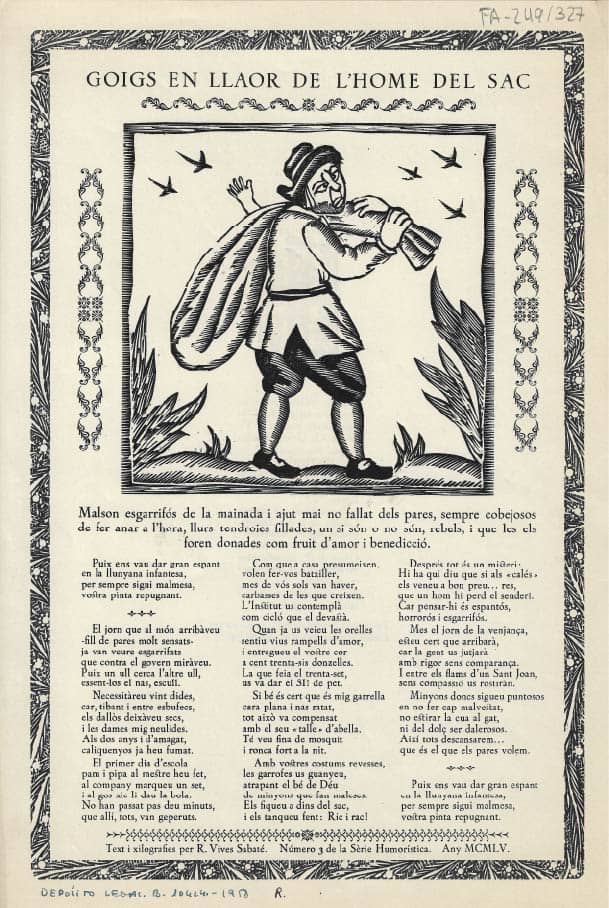
Goig de l'Home del Sac, 1955, CRAI Humanities Library (University of Barcelona).
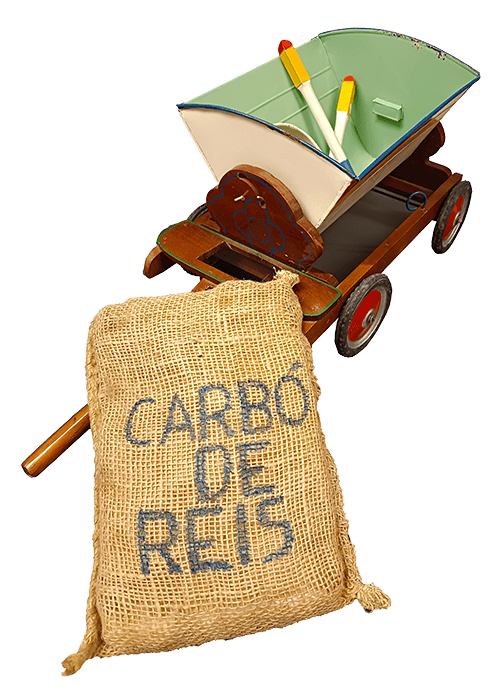
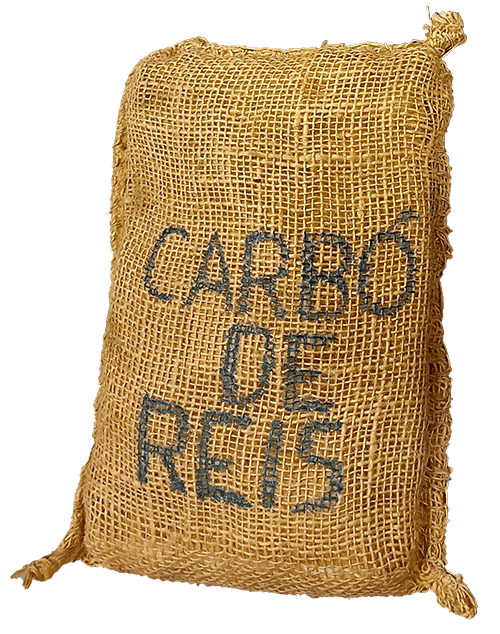
Coal from the Kings
“If you don’t behave, they’ll bring you coal!†According to the legend, children who behave badly during the year receive coal instead of gifts when the Three Kings pass by their house. This threat has often been used as a strategy for children to understand that bad actions have consequences. In recent years, however, its use has been criticised, since it causes children to act out of fear of punishment and not out of having integrated the values of positive behaviour.
Myths and Legends
For many years, stories of stereotypical characters have been used in Catalonia that, despite having different names or forms — depending on each area — gather popular traditions, and in which everyone recognises the values of good and evil. Some pieces from Barcelona’s Museu Etnològic i de Cultures del Món tell us about these myths related to fear.
The Witches
Traditionally represented as old women who lived on the peripheries of society and, through spells, caused harm to others. Legends about these women warned children about the danger of disobeying norms. In a patriarchal and highly religious society, women were the perfect target to blame for all evils, and in the past, many women died after being accused of witchcraft. Over the years, it seems that they have gradually lost their ability to terrify, and many witches have become friendly characters or symbols of wise and empowered women.
The Demon
It is a character linked to the Christian tradition that represents evil and temptation. In many tales and legends, it was a feared figure who, through trickery and false promises, steered people away from the “right pathâ€. Yet, in our culture, he has often also ended up as a ridiculed character. For example, in puppet representations, the demon is the character who plays dirty tricks on others but ends up being defeated and shot down by blows of a stick.
Carnival mask, wolf head. Molded and painted cardboard. Barcelona, mid-20th century. Museu Etnològic i de Cultures del Món. Acquired in 1960 at El Ingenio, Barcelona.
The Wolf
Traditionally portrayed as a wild, cunning and dangerous animal that had to be defeated and kept away from herds. The wolf has been a symbol of the danger represented by disobedience and imprudence. Feared and admired, it is an animal that we also find caricatured, as in the case of this carnival mask.
The Sack Man
This character is found in many cultures, and is always described as a feared and sinister being who kidnaps disobedient children. They are put into the sack and never seen again. The threat of separating children from their parents is especially effective in frightening them, but it has also been considered to cause negative effects, such as anxiety or mistrust between children and adults.
Goig de l'Home del Sac, 1955, CRAI Humanities Library (University of Barcelona).
Coal from the Kings
“If you don’t behave, they’ll bring you coal!†According to the legend, children who behave badly during the year receive coal instead of gifts when the Three Kings pass by their house. This threat has often been used as a strategy for children to understand that bad actions have consequences. In recent years, however, its use has been criticised, since it causes children to act out of fear of punishment and not out of having integrated the values of positive behaviour.
Intercultural Debate
This exhibition facilitated two debates with the participation of local residents, civil society organizations, and professionals from the fields of culture and social inclusion. The objective of these debates was to reflect on how cultural institutions and organizations represent cultural diversity in their exhibitions and activities, using the figure of the so-called “Negre de la Riba” as an example.
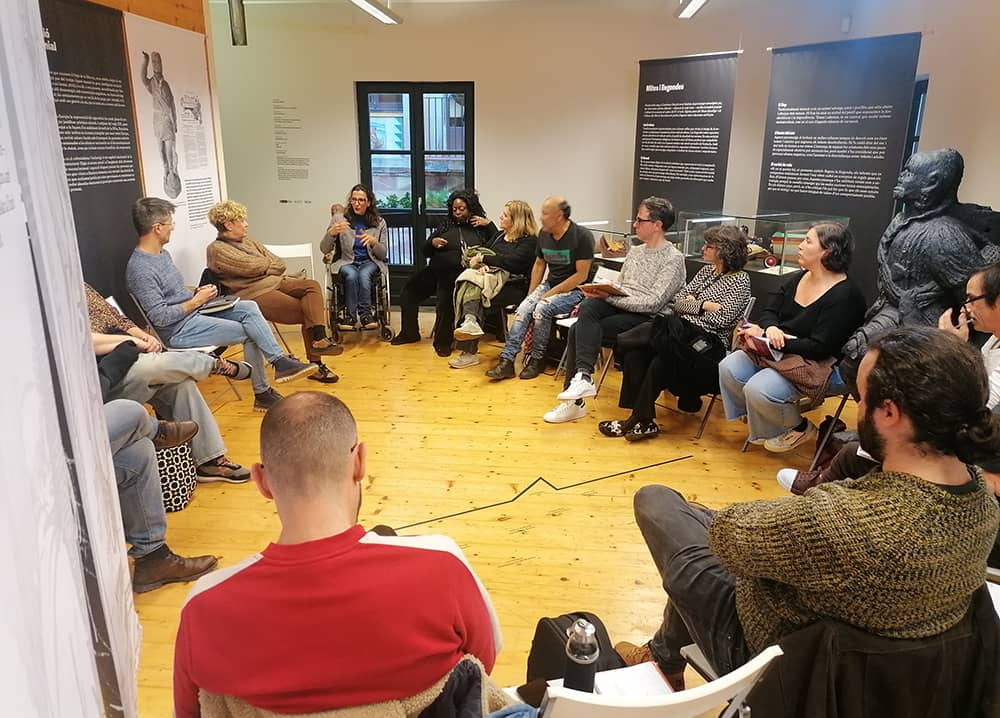
Summary and Recommendations
The debates, held in February 2025, allowed for the gathering of impressions, feelings, and viewpoints about this figurehead from people of various cultural backgrounds. The ideas that emerged from these discussions have led to valuable material for understanding the current role of this figure in the Barceloneta neighborhood and in the city of Barcelona. Furthermore, the conclusions drawn offer recommendations for cultural institutions addressing the history of slavery and colonialism and their links to contemporary realities in their exhibitions and activities.
Download the PDF document with the summary of the two debate tables and recommendations for organizations and cultural institutions.
CREDITS
Curator: Oriol López i Badell
Documentation and texts: Núria Morell Cortés and Oriol López i Badell
Historical advice: David Garcia Llorca
CB1761 team: Jesús Floro, Cristina Cazorla, Miquel Pauner, Laura Molinos i Ricard Navarro
MUEC team: Carles Vicente, Núria Morell i Jacob Casquete
Exhibition design: Èlia Clemente Vinzia
Graphic design: Albert MartÃn i Oriol
Production and installation: EGM Interoad
Text correction: Vicenç Benéitez
Archive documentation: CRAI Biblioteca de Lletres de la Universitat de Barcelona, Arxiu del Museu MarÃtim de Barcelona, Biblioteca Virtual de Premsa Històrica del Ministeri de Cultura espanyol i Hemeroteca Digital de la Biblioteca Nacional d’Espanya
Acknowledgements: Jordi Pastor, M. Dolors Jurado, Josep M. Turiel, Oscar Pérez Casanova, Esther Zamora Caparrós, Jonathan GarcÃa Català , Jaime González Moscoso, Anna Tantull, Roberto López, Associació Cultural Palo Q’SeA, Colla de Diables i Diablesses de la Barceloneta i Col·lectiu Planeta Barcelona
Web Format of the Exhibition: Carles Mestre
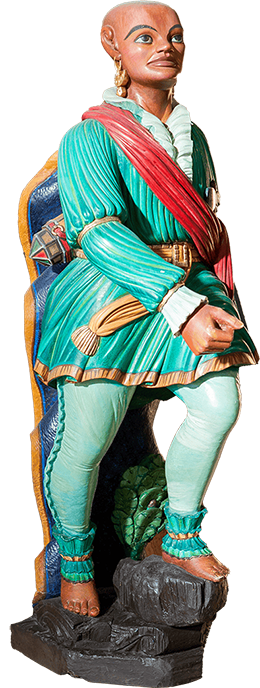
The figurehead, restored in 1996, is currently on display at the Maritime Museum of Barcelona.
Photo courtesy of the Museu MarÃtim de Barcelona.
The figurehead, restored in 1996, is currently on display at the Maritime Museum of Barcelona.
Photo courtesy of the Maritime Museum of Barcelona.
The figurehead, restored in 1996, is currently on display at the Maritime Museum of Barcelona.
Photo courtesy of the Museu MarÃtim de Barcelona.
The figurehead, restored in 1996, is currently on display at the Maritime Museum of Barcelona.
Photo courtesy of the Maritime Museum of Barcelona.
CREDITS
Curator: Oriol López i Badell
Documentation and texts: Núria Morell Cortés and Oriol López i Badell
Historical advice: David Garcia Llorca
CB1761 team: Jesús Floro, Cristina Cazorla, Miquel Pauner, Laura Molinos i Ricard Navarro
MUEC team: Carles Vicente, Núria Morell i Jacob Casquete
Exhibition design: Èlia Clemente Vinzia
Graphic design: Albert MartÃn i Oriol
Production and installation: EGM Interoad
Text correction: Vicenç Benéitez
Archive documentation: CRAI Biblioteca de Lletres de la Universitat de Barcelona, Arxiu del Museu MarÃtim de Barcelona, Biblioteca Virtual de Premsa Històrica del Ministeri de Cultura espanyol i Hemeroteca Digital de la Biblioteca Nacional d’Espanya
Acknowledgements: Jordi Pastor, M. Dolors Jurado, Josep M. Turiel, Oscar Pérez Casanova, Esther Zamora Caparrós, Jonathan GarcÃa Català , Jaime González Moscoso, Anna Tantull, Roberto López, Associació Cultural Palo Q’SeA, Colla de Diables i Diablesses de la Barceloneta i Col·lectiu Planeta Barcelona
Web Format of the Exhibition: Carles Mestre